Stalling at the Top: Porsche and the Limits of Luxury in a Changing Market.
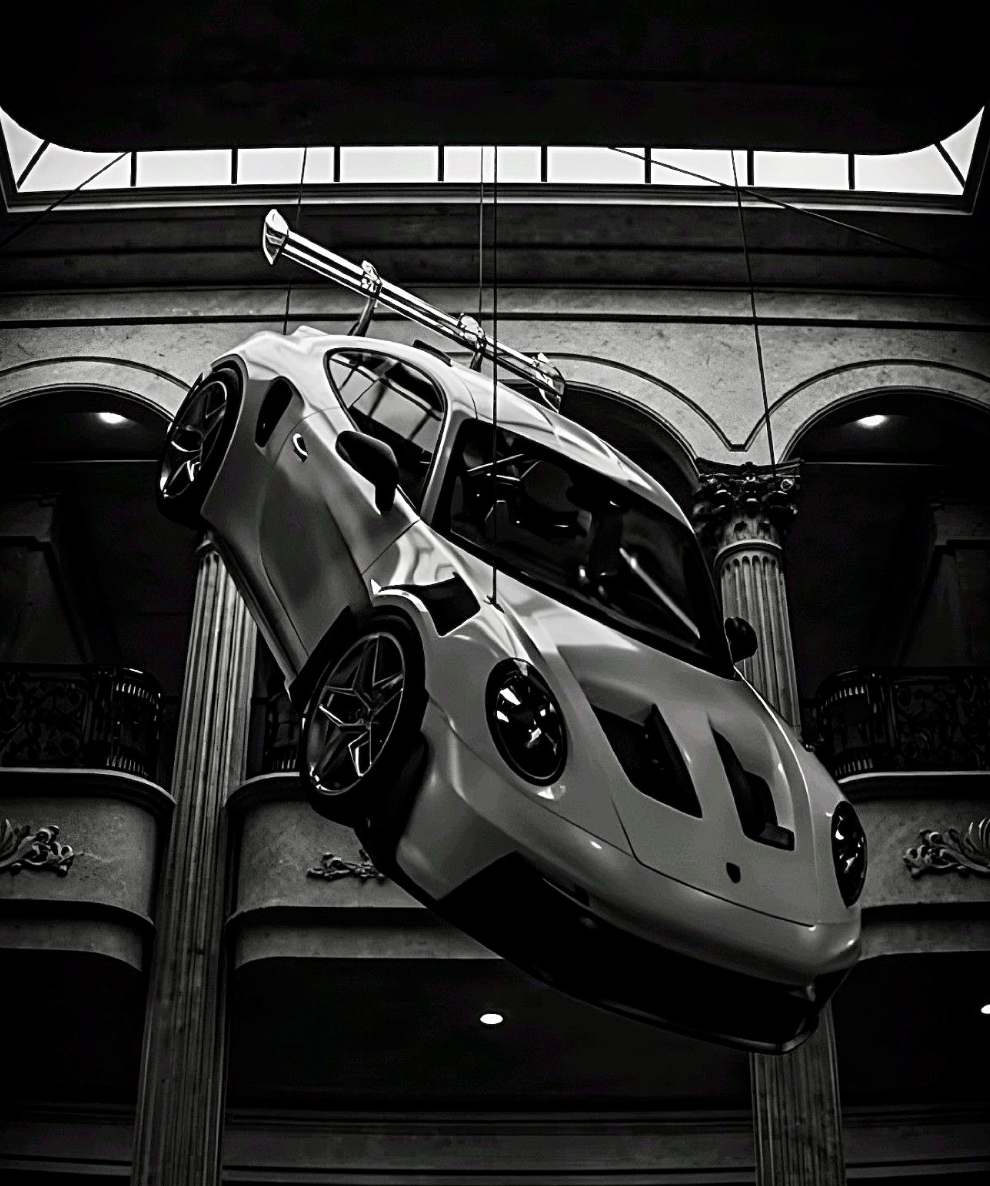
Few companies embody the ideal of profitable exclusivity as well as Porsche. For years, the German carmaker has stood apart from the rest of the auto industry by proving that a more selective business model could still generate some of the highest margins anywhere in manufacturing. However, that reputation is being tested. Over the course of 2025, Porsche experienced one of the most dramatic financial setbacks in its history. To understand how it happened requires a deeper look into the combination of drivers that caused it.
A 98% drop in operating profit - from €5.3 billion to €90 million in a single year - is the kind of collapse you'd expect from a struggling startup burning through outside investments, not from one of the most consistently profitable carmakers in the world.
What is less clear is why the warning signs went unanswered until the issue materialised in numbers on Porsche’s profit records.
To understand how far Porsche fell, we will need to have a look at where it stood before the collapse. For most of the past decade, Porsche wasn't just profitable. The company reported operating margins that far surpassed those of mainstream carmakers and even most of its luxury competitors. In 2024, the group's operating return on sales stood at 14.1%, a figure that made Porsche look less like an automaker and more like an efficient company that just happened to sell cars. That kind of margin suggested that they wouldn’t be as influenced by the forces reshaping the rest of the industry.
The confidence in that position showed up in Porsche's strategy. The company set an ambitious target: 80% of its global deliveries would be of electric vehicles by 2030. It was a big gamble for a brand whose identity was built on the sound and feeling of the flat-six internal combustion engine. Nevertheless, Porsche, being an innovative brand, aimed to lead what was thought to be a market transition and to incorporate EVs into its lineup in its own way and at its own pace rather than following competitors.
The foundation of the brand’s profitability and ambition, though, was built on a decision that hadn’t been questioned for years: Porsche's manufacturing remained concentrated entirely in Germany, at its Zuffenhausen and Leipzig plants. During times of predictable global trade, this wasn't a vulnerability; rather, it reinforced the German quality and engineering reputation the brand was built on. But concentrated single-country manufacturing implies that the company relies on that country's trade relationships and the markets in other countries remaining stable.
Of all the reasons for Porsche’s downfall in 2025, the EV strategy is the one that stands out as self-inflicted. The trouble began with the approach Porsche took. In 2025, the EV marketing framed the transition more as an obligation it was fulfilling than a growth of the brand. As a result, that wasn’t welcomed with open arms from the customer base that had spent decades buying the emotion created by the Porsche engines.
The effect of this decision was visible in the numbers even before 2025. Taycan deliveries had dropped from 40,629 units in 2023 to 20,836 units in 2024 and slightly more than 6,000 examples delivered in the first half of 2026. Thus, by mid-2024, Porsche had loosened its once-firm 80%-EV target. The forward-looking transformation started to look like a losing strategy being renegotiated in public, as the market failed to adopt it.
The EV strategy displays something deeper than a bad product cycle. Porsche tried to move fast on electrification while preserving the aspects that defined its combustion engine identity, without fully aligning the differences between the demand for the two. Thus, the brand's traditional strength became a liability when applied to a market it hadn't yet fully understood.
Porsche's problem isn't only about declining EV demand, but also with the loss of one of its biggest markets. While Porsche's deliveries in China fell 26% in 2025, the Chinese EV market was going in the opposite direction - it was expanding with speed few Western automakers could match, not to mention counter.
China's importance to Porsche was built over the last two decades, especially on the emotion of the combustion engine and driver-focused engineering the brand is famous for. Porsche entered the Chinese market in 2001, opening its first dealership in Beijing, and by its tenth anniversary it had grown from selling only 27 cars in 2002 to nearly 13,900 annually. The company’s role in the country can be described as culturally changing - Porsche played a pioneering role in introducing sports car culture to Chinese consumers.
That investment paid off really well. By its 20th anniversary in China in 2021, it had become Porsche's largest market. Porsche hit a record 95,671 annual sales in China in 2021, representing nearly a third of its entire global total that year - a scale few luxury automakers have matched.
Nevertheless, Porsche found that the market was working against it. Sales of Chinese electric vehicles grew roughly 29% globally in the first ten months of 2025 alone, and eight out of ten of the best-selling EVs that year were Chinese. By late 2024, China already accounted for roughly three-quarters of all global electric car sales, and the country's dominance extended well beyond automobiles: CATL alone commands nearly 38% of the global EV battery market, including Porsche for their Macan SUV. This gives Chinese manufacturers control over the supply chain that determines cost and performance for the entire industry.
China's luxury EV segment now has some serious contenders competing directly in the price bracket Porsche once had mostly to itself. Market leader BYD alone sold over 3.17 million EVs in China in 2025, which equals around 24.1% domestic market share. Additionally, there are new entrants, which are scaling at paces legacy automakers rarely achieve: Xiaomi's EV division, which only began selling cars in 2024, has already captured a 3.8% share of China's market.
Speed of development further builds on the pressure. In the year leading up to October 2025, Chinese regulators approved 38 new car models for BYD alone compared to just six for the entire Volkswagen Group. This structural gap illustrates how much faster domestic manufacturers can refresh their lineups, compared to the multinational structures of Porsche. The technological features are advancing with a similar pace: BYD's "God's Eye" driver-assistance system, launched in February 2025, triggered a wave of competition from rivals within weeks. These speeds of feature competition and integration that Western luxury brands struggle to match.
Every Porsche sold is still built in Germany. This helped the brand's identity for decades under stable trade rules, but became a serious liability the moment those rules changed. The United States accounted for nearly one in three Porsches sold in 2024, making it another of the company's most important markets. But with no local production, Porsche's U.S. dealers depend entirely on imports. This became a problem when Trump’s administration tariffs on European auto imports took effect. Unlike some of its rivals, like BMW and Mercedes, both of which have existing U.S. plants, Porsche had no way to go around the tariffs.
The financial toll grew in stages throughout the year. Porsche absorbed around €400 million in tariff-related costs in the first half of 2025, and the final figure for the year came in at approximately €700-800 million. Consequently, this affected customers directly. Tariffs triggered considerable increases in price, with the 911 selling for $135,500 - compared to $114,400 in March 2024. Porsche's own executives were honest about the situation: CEO Michael Leiters said that "market conditions in the United States have... changed as a result of tariff policies."
Porsche AG is majority-owned by the Volkswagen Group, and for years that worked predominantly in Volkswagen's favour. Porsche, with its outsized margins - a 14.1% operating return on sales in 2024 - functioned as one of the most important profit engines for the group, helping offset the smaller returns from the higher-volume, lower-margin brands. When Porsche's earnings evaporated in 2025, that dynamic reversed, and the damage affected the whole group. Volkswagen recognised a non-cash impairment charge of around €3 billion on the goodwill allocated to the Porsche business segment, on top of an additional €2.1 billion as a byproduct of Porsche's strategy reversal - a combined €5.1 billion drag on the Volkswagen Group's operating result for 2025 alone. That forced Volkswagen to cut its operating margin projections from 4-5% down to just 2–3%, which made the scale of the profit decrease even more. Volkswagen's revenue held relatively the same at €321.9 billion, slightly lower than €324.7 billion in 2024.
However, the pressure wasn't only financial - it was structural. While Oliver Blume served as CEO of both Volkswagen and Porsche at once, Porsche's problems continued to grow. That dual role came under public judgement, with Germany's business press openly calling on Blume to give up one of the two positions rather than risk both companies suffering from divided attention. But Porsche's pain wasn’t unique within the group. Volkswagen's group-wide 2025 profit collapsed by around half, with trade difficulties in China and the change of strategy at Porsche cited as causes. Volkswagen announced plans to cut around 50,000 jobs across Germany. Other group brands felt similar pressures - Audi and rival Mercedes-Benz were also struggling with weak Chinese demand and intensifying local competition - showing that Porsche's crisis wasn’t a standalone failure, but rather a group-wide vulnerability. Looking ahead, Volkswagen has trimmed its five-year investment plan to €160 billion through 2030, down from €165 billion for the 2025–2029 period and €180 billion for 2024–2028.
Additionally, falling share prices made this worse. Porsche SE's debt is backed by the value of its Volkswagen and Porsche AG stakes, tracked through a loan-to-value ratio - with both stocks losing value through 2026, the ratio rose to 28.5% by mid-year, as €3.18 billion in impairments on its stakes left the holding company with a €2.22 billion net loss for the half, in turn resulting in a tightening of the financial room Porsche SE had to manage it.
Looking at this shows that Porsche's 2025 collapse wasn't caused just by one misstep by the brand or a change in its China exposure. It was an example of how in tightly coupled corporate structures a subsidiary's crisis can affect the whole parent company. In addition, it showed how ownership incentives, meant to align interests, can instead complicate the response when things go wrong.
Porsche's full-year 2025 results give us a holistic perspective of the situation: sales revenue fell to €36.27 billion (from €40.08 billion in 2024), while net income fell to €1.006 billion in 2025 from roughly €1.79 billion in 2024, a drop of about 44%. But the biggest crash was the operating profit, which went from €5.64 billion to just €413 million, a plunge of around 93%. Compounding on that, China's lowering of the threshold for its 10% ultra-luxury consumption tax from July 20, 2025, from ¥1.3 million (€156,650 in mid 2025) to ¥900,000 (€110,083 in mid 2025), pulled models like the Taycan and Panamera directly into the taxed bracket, adding further costs in an already shrinking market. Worsening the transition further, Porsche is winding down the combustion-engine versions of the Macan - its best-selling model in 2025 - with no direct successor until 2028, leaving a gap in one of its most important nameplates just as the company can least afford to lose volume.
Аfter such a setback, Porsche needed to reevaluate and fix what had gone wrong. On January 1, 2026, Dr Michael Leiters became CEO of Porsche AG. He was no stranger to the automotive industry, with 13 years of experience in managerial positions at Porsche at the beginning of his career. From there, he managed some of the industry's biggest: eight years as Chief Technology Officer at Ferrari, where he helped develop flagship models like the SF90 Stradale, before becoming CEO of McLaren Automotive in July 2022. At McLaren, he pushed the brand toward hybrid technology and improving build quality, which is a part of the operational weakness that had crippled Porsche's own EV rollout.
The choice of Leiters also signals something about the direction Porsche intends to take. Leiters has an enthusiasm for hybrid technology, which lines up with Porsche's own focus of continuing the combustion engine and enhancing it with electric motors rather than forcing an all-electric transition. In the same announcement confirming his appointment, CEO Blume acknowledged that "Massive changes in what are by far Porsche's largest single markets, the USA and China, have placed new demands on our business model" and pointed to the company's new drivetrain flexibility and cost structure as the foundation for recovery. Investors also agreed the change in leadership was needed: Porsche's stock had roughly halved since its 2022 IPO, and Volkswagen shares had fallen nearly 30% during Blume's three-year period of running both companies.
Leiters wasted little time before doing things his way with his restructuring plan called the “Future Package”. In April 2026, Porsche agreed to sell its stake in Bugatti Rimac and the Rimac Group, signalling the brand's step back from its electrification ambitions. To follow, the company went further, discontinuing three divisions - the Cellforce Group, its battery-technology developer; Porsche eBike Performance; and Cetitec, its data-communications software unit - cutting more than 500 jobs in the process. Leiters was direct about the reasoning: "Porsche must refocus on its core business. This is the indispensable foundation for a successful strategic realignment. This forces us to make painful cuts - including our subsidiaries." The message was clear: technology diversification was being abandoned in favour of a narrower focus on the cars that actually make money.
But that wasn’t enough, as the downsizing continued. Porsche formally confirmed 3,900 layoffs with its works council in June 2026, expanding on the smaller 1,900-position plan announced back in February 2025. Even so, that figure didn't stay the same for long, with Leiters saying that the package was "not sufficient," and just a month later the company agreed to eliminate another 5,000 roles, reducing the total workforce by 9,000 positions by 2035. This is equivalent to nearly one in five jobs across the company. Notably, the deal wasn't one-sided; the management and staff agreed to postpone 3.5% of their expected pay raises until 2035, while senior leadership committed to deferring an equivalent amount in 2027 and 2028. This shows the togetherness of Porsche's team as the executives are sharing the costs rather than leaving employees to absorb it alone. Despite the scale of the cuts, Porsche reaffirmed its 2026 guidance of €35–36 billion in revenue and a 5.5–7.5% operating margin, betting that a leaner, more focused company could rebuild profitability even with a smaller footprint than the one that existed before the crisis.
With the aforementioned in mind, Porsche's tariff exposure wasn't unique. Ferrari faced an identical structural problem, with its manufacturing exclusively located at its Maranello plant. Yet the outcome was nowhere near comparable. Ferrari flagged a maximum 50-basis-point risk to its 2025 profit margins from the tariffs. To offset this, it raised prices by up to 10% on higher-end models like the Purosangue and the 12Cilindri, where customers were least likely to be price sensitive, and by Q2 2025, it had removed the tariff-risk warning from its financial forecasts entirely. Deliveries in 2025 stayed as planned, with the company maintaining its deliberate, low-volume strategy to keep exclusivity. The contrast in the outcomes suggests Porsche's crisis wasn't simply about geography and changes in trade conditions - Ferrari absorbed the same tariff shock with a customer base wealthy enough to shrug off a 25,000 - 50,000€ price increase, and a strategy built around manufactured scarcity rather than growth. Porsche, being positioned slightly lower on price and reliant on higher volumes to hit its margins, had far less room to simply raise prices without a possible backlash from its customers.
Porsche's 2025 collapse wasn't a single failure. It was several factors working at the same time - a misjudged execution of a strategy; a market that shifted from the company's largest source of growth to evidence of how fast even a brand with such legacy could be replaced; manufacturing built for a world of stable trade; and a parent company structure that makes Porsche's crisis affect the whole group as well.
Porsche needs to reevaluate its goals and aims, and the answer may be hidden in what made it successful in the first place. A Porsche buyer isn't shopping for the newest infotainment system or the longest range figure - they're buying into seventy years of mechanical, driver-focused feeling. In a world with growing competition for features, the true enthusiasts will be after that refreshing feeling of connection with the car and the road; that kind of authenticity may be the one advantage that won’t disappear after a couple of production cycles.
And what is the outlook for Porsche for 2026 and after - this isn't a company waiting out a rough patch. This means the new strategy isn't a temporary adjustment. It’s the path of Porsche resizing itself for a smaller, lower-margin version of the business that once seemed untouchable. Whether this leaner company will still command the loyalty and admiration it once did can be answered only by time, but a company that spent seventy years building something no competitor could fully replicate has the foundations to become great again.