Unicredit: The Bank That Bought Germany.
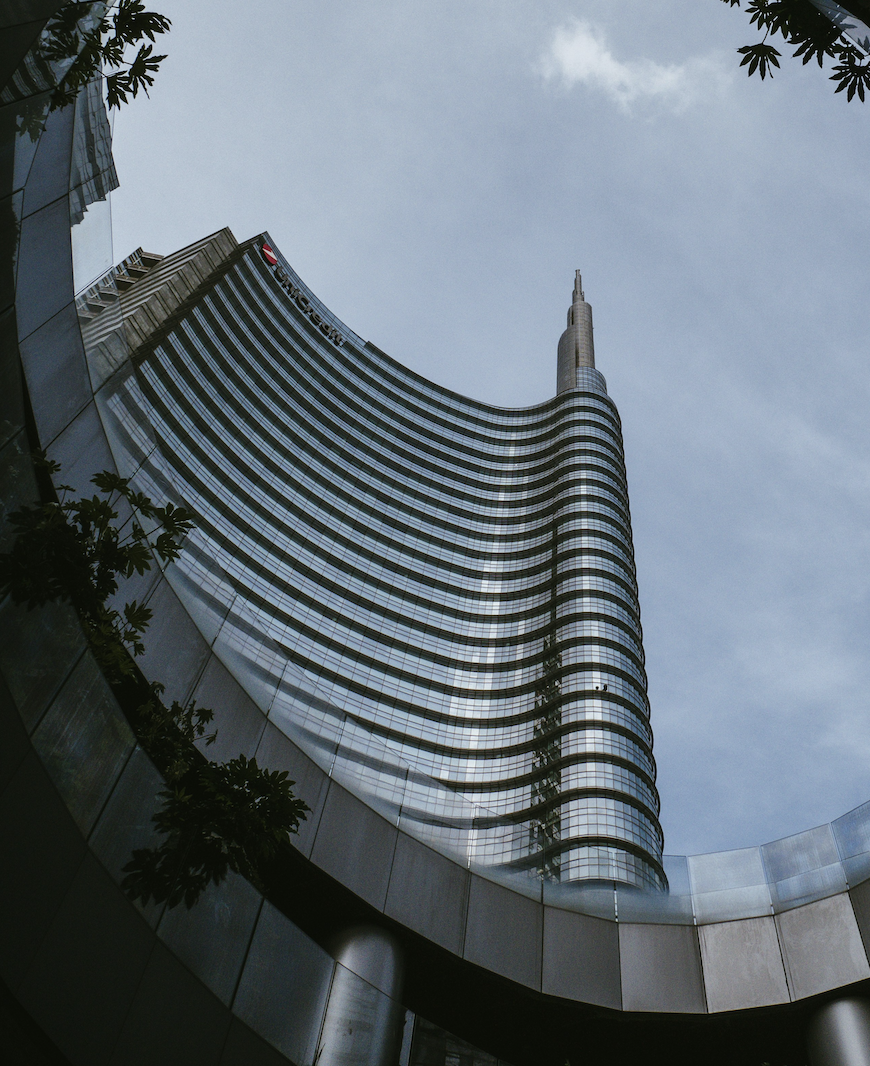
UniCredit Tower, Piazza Gae Aulenti 3, Milan.
On the 8th of July 2026, UniCredit Bank announced that 17.6% of Commerzbank’s share capital holders accepted the exchange offer launched by the Italian bank in March. This increase of 17.6% ownership is added to the already established 30% in positions that UniCredit had assembled through secondary market purchases. Since the first declaration of ownership in September 2024 at 9%, this currently leaves the Italian company with 47.6% of the capital of Commerzbank. With further regulatory grant, UniCredit will own 49.65% of the voting rights at the German Bank. Currently, the shares owned by UniCredit do not give legal control of their German counterpart, but the gap between the holdings and the legal requirement to lead Commerzbank has narrowed.
The issue with this deal is not the size of the ownership, but the institutional opposition towards this deal. Germany’s Federal Ministry of Finance had objected to this takeover since the announcement of the deal in 2024, and yet the deal continues. Further, Commerzbank’s own supervisory and management boards firmly oppose the share acquisition. The German Bank’s analysis states that only 2.7% of its independent investors tendered the offer, meaning the acceptance that carried it came from holders other than the company's long-term owners.
But the important point to be made here is that unlike most bank merger models since 2008, UniCredit Group is not buying Commerzbank because they need to. Such large cross-country bank mergers can be split into two groups: rescue mergers and defense mergers. The first one is a type of acquisition where a larger, stronger institution absorbs a smaller one because supervisors would rather arrange a sale than manage a resolution. The latter is one in which two subscale banks combine resources to overcome impossible singular operational costs into a manageable joint unit. So, neither of these fit our case with UniCredit. In the six months to the 30th June 2026, UniCredit earned $7.5bn, the best half-year in its history, on a 23.7% return on tangible equity and a cost/income ratio of 34%, meaning it spends thirty-four cents to generate a dollar of revenue, a level no other large European lender currently matches. Therefore, the only logical reason UniCredit is acquiring Commerzbank is that it judges the asset to be mispriced. Interestingly, it isn’t necessity forcing the takeover, which has historically been the reason. That absence is precisely why the reluctant German government has ground on which to protest the foreign ownership of a domestic bank.
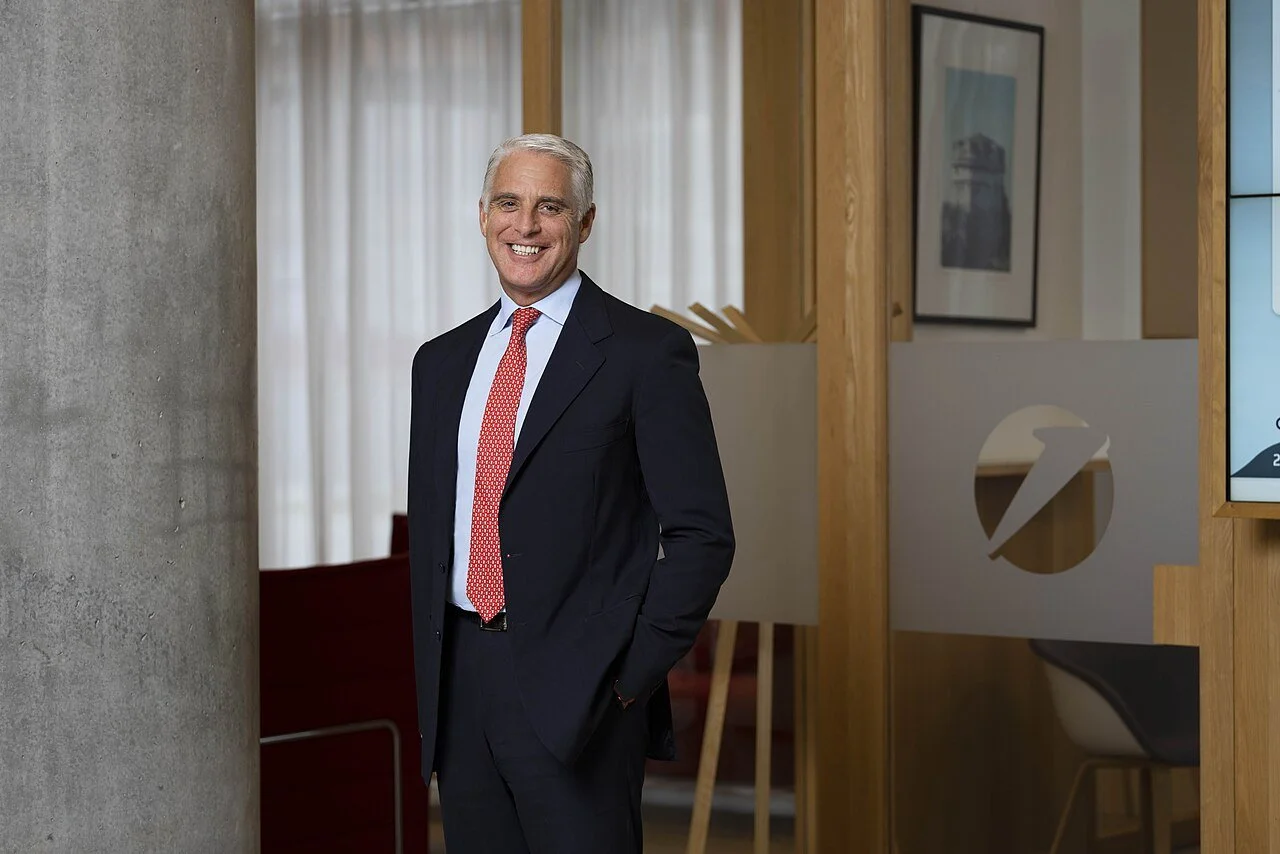
Andrea Orcel, Chief Executive Officer UniCredit Group S.pa
The Chief Executive Officer of UniCredit Group, Andrea Orcel has accomplished something that European banking has deemed impossible for nearly two decades. It achieved the assembly of a controlling interest in a systemically important bank in another state without the agreement of its board, government or shareholders. Now this leaves us with the central question, is this a takeover, or are the institutions overreacting?
Now what would be misleading here would be to categorize UniCredit as an Italian bank with foreign operations. The geographic distribution of the income UniCredit produces tells a different story. In 2024, the bank generated revenue from Italy at 44.9%, Germany 21.6%, Central Europe 17.1%, Eastern Europe 11.4% and Russia remaining at 5%. The Italian bank operates in Germany by a franchise known as HypoVereinsbank, which was acquired in 2005 and currently a benchmark used by Orcel to measure performance of every other nationally owned business. In an event where regulatory institutions grant consolidation, Germany would become the group’s single largest revenue pool, with Italy being is second place. A consequence that the political argument in Berlin has consistently declined to engage with, since it implies that the acquirer's centre of gravity would shift toward the country resisting the acquisition rather than away from it.
In terms of earnings, there isn’t anything necessarily special about the bank, the profits are split roughly evenly between corporate + investment banking and on the other side retail – all distributed across roughly 3,000 branches. Where UniCredit excels isn’t on the profits front, but the costs one. In Q1 and Q2 of 2026 the cost/income ratio sat at 34% - a figure earned through sustained subtraction rather than any temporary revenue advantage. For that reason the bank managed to sustain a raise of net profit from $1.8bn in 2020 to $12.4bn in 2025. And we have to keep in mind that these numbers have been achieved in a complete rate cycle, including the period where policy rates began falling and net interest income across the entire banking sector came under pressure.
So this extremely favourable cost position became the financing of the acquisition strategy. To continue further with UniCredit’s buying spree, Banco BPM was under bidding by UniCredit in November 2024, but the offer was withdrawn a few months later after the Italian government applied its golden power regime. It is a type of mechanism that permits Rome to impose conditions on transactions involving assets deemed strategic. It attached requirements that UniCredit found unfulfillable or unacceptable for their offer. So Orcel found himself, refused at home by his own government, while also being chased away by a foreign one. Therefore, he returned to the domestic market, but a marginally smaller scale, bids expected to be placed by the end of the month for BdM at $700m and CariOrvieto at slightly over $117m.
The story is very similar with Greece, UniCredit acquired 9% of Alpha Bank, through the Greek bank rescue fund for $343m in July 2023. By May 2025, the Italian bank doubled its equity hold to just above 20% through derivatives, while and just three months later took it to 26% share in Alpha Bank. What is most interesting is that this ownership share cost UniCredit just 65 basis points of core capital, and converted the synthetic position into a direct holding of 29.8% in January 2026, with further instruments capable of lifting it toward 32.1%. With a total outlay of about $1.4bn, the Greek bank is expected to contribute about $285m of net profit to UniCredit’s books. What is more interesting is that the Greek authorities welcomed the investment publicly, and the central bank did not obstruct. This suggests that what distinguishes the German and Italian cases from the Greek one is not the structure of the transaction but the political weight attached to the target.
Q1 and Q2 of 2026 have recorded the strongest growth in the bank’s history and its twenty-second consecutive quarter of growth. A trend clearly visible since CEO Andrea Orcel’s arrival in April 2021. Net profits for the bank have reached $7.5bn, an increase of 24% and a 23.7% return on tangible equity. Further, UniCredit also displayed a 34% cost/income ratio, with a cost of risk at 17 basis points – truly great figures for the industry. On the 23rd of July management raised the 2026 ambition to roughly $13.5bn before integration costs and lifted the 2028 target above $15.2bn, in both cases stated before any consolidation of Commerzbank.
But the figure that has allowed for these continuous attempts to monopolize markets and acquire competitors isn’t the headline profit. The Italian bank generated 98 basis points of core capital just in Q1 alone and runs at 400 basis point per year, against a target from management of 13%. A bank that produces 4 percentage points of capital annually does not have to choose between distributing dividends to shareholders and acquiring other banks. As a matter of fact they can comfortably fund both, without needing to step into the equity market, externally.
While UniCredit has done both, they have not done so evenly. The distribution to shareholders totaled $5.5bn in Q1 under a policy of returning 80% of earnings. While there was a $5.6bn in share buyback attached to the 2025 results, the bank never executed it. The funds went straight into the Commerzbank offer, with the justification that the capital would earn more deployed in Frankfurt, rather than return in Milan. Shareholders were asked to fund the idea, through already promised money, and they did not object.
The exchange offer with Commerzbank shares, launched on the 16th of March 2026 wasn’t the usual instrument – and the design of the offer reveals the intention. German law protecting against corporate takeovers sets a threshold of 30%, above which an acquirer buying in an open, secondary market must bid for the entirety of the company, at the regulated price. Well, UniCredit did reach the ceiling and couldn’t go any further without bidding for Commerzbank in its entirety or stopping there. The voluntary offer, priced at 0.485 UniCredit shares for each Commerzbank share and valuing the whole at some $41bn, was built to carry the holding past the threshold without acquiring control. This all leaves the bank free to buy in the open market afterwards, with the pace that it desires.
Although the instrument achieved its mechanical purpose, it could not mitigate the political backlash. Acceptance did reach 17.6% of capital, being sufficient, but from Commerzbank’s side the acceptance among independent institutional and retail shareholders at 2.7%. While this significant discrepancy between the numbers cannot be accounted for because UniCredit did not disclose and Commerzbank cannot verify, a gap so large is difficult to attribute to owners acting on a considered view of the industrial logic.
To be fair, German opposition clearly does not see the benefits that their Greek counterparts see. Commerzbank’s defence is substantive rather than just expressing vocal disconent. In February 2025 the German bank announced a reduction of their workforce by 3,900 people, with targets being raised, and a record year, where in Q1 and Q2 share price doubled. These cuts go in both directions, strengthening the image of the bank, requiring no foreign investors while also disproving UniCredit’s judgement that Commerzbank shares were underpriced when they began buying.
And this all raises a big question – what follows next? UniCredit will continue to hold just under half of the votes, giving them no operational control, and Andrea Orcel has continuously promised eighteen months of separation before merging with HypoVereinsbank. On 2 September 2026 Bloomberg reported that Bettina Orlopp, CEO of Commerzbank, had signalled she was unlikely to remain if she could not reach agreement with UniCredit and the supervisory board it may install. Where controversy arises isn’t the legality of UniCredit’s practices, but whether a capital market can be called open, when an important institution such as Commerzbank can be acquired over the objections of its board, accompanied by those of their government and the majority of its independent shareholders.
When we consider the allocated capital, the transaction is very defensible from a business standpoint, and actually it may prove to be quite a bargain. UniCredit’s share of Commerzbank was acquired over the course of two years at prices that did not yet reflect the recovery of the bank – so we could argue that shares were quite inexpensive. And let’s not forget that UniCredit generates capital, faster than it can otherwise deploy, and all executed by a management board that has met its targets since the step into power by Andrea Orcel in 2021.
The full deal consolidation is expected to reduce the core capital ratio by roughly 200 basis points, to around 13%. This all before any effect from purchase price allocation – the lower bound of the range management has set for itself. A substantial surplus will have been converted into a controlling position in a market where UniCredit already ran the fourth-largest lender, leaving it materially less flexible than at any point in the past three years.
In conclusion, the truth is that UniCredit was right about the mechanism by which they acquired the shares, but it is a narrower achievement in hindsight. A cross-border banking conglomerate assembled in this way establishes mainly a precedent. National approval being optional. We are certain that every government in Europe is now going to factor into its screening regime and threshold for intervention this case. The most likely consequence of these actions is that the future route for a similar action will be considerably harder to travel through, for the next player. And the cost of proving the point will fall on the second entity to follow Orcel’s path, rather than on UniCredit. The final open question for the future of banking mergers and takeovers is: whether this aggressive pursuit by UniCredit was worth it?
