The Limits Of Financial Neutrality: When Sanctions Become Cheaper Than Non-Alignment
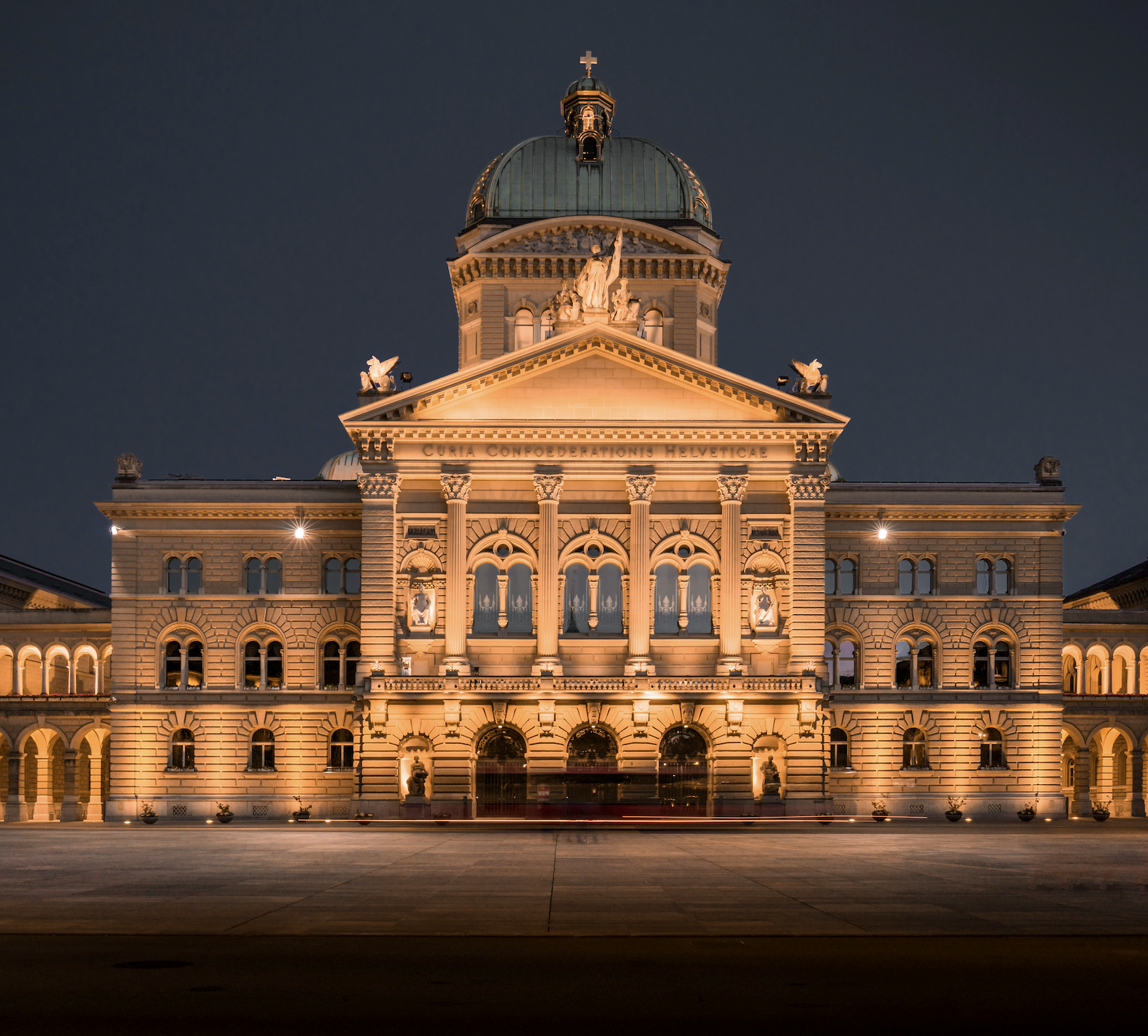
Bundesplatz, Bern, Switzerland.
On 27 September, 70.15% of Swiss voters and all of the cantons collectively rejected a stricter constitutional definition of neutrality. The proposal would have barred Switzerland from joining sanctions not approved by the United Nations and restricted its cooperation with military alliances such as NATO. The result left the country free to continue deciding on economic sanctions case by case, including further measures similar to those adopted against Russia after its invasion of Ukraine. And for Swiss banking, the referendum result exposes a deeper contradiction.
Neutrality has been part of Switzerland’s appeal as a safe destination for foreign wealth. For many, aligning with international sanctions appears to weaken the advantage political distance promises. On the one hand, access to Swiss finance becomes dependent on geopolitical tensions, on the other, leaning towards the European countries and the US on political matters pushes away capital holders from other not so stable regions.
Yet Swiss banks themselves depend on currencies, markets and financial infrastructure dominated by those same Western economies. Without access to the West, neutrality would simply not be worth as much. Staying strictly geopolitically unbiased could put Switzerland’s relations with crucial financial partners at risk and bring even greater economic costs. Therefore aligning with Western sanctions and keeping the less restrictive form of neutrality, backed by the voters, actually preserves more than it weakens the economic value of Swiss political positions.
Switzerland’s global wealth management sector has historically rested on a combination of customers’ privacy, political neutrality, legal stability, protection of property, a strong currency and financial expertise. Switzerland could offer foreign capital holders what other financial centres couldn’t, precisely discretion and political security.
Banking secrecy was the main attraction in the past and is even backed up by a law, stating that disclosure of depositors’ personal details may be considered a criminal offence. This gave foreign depositors more than simple confidentiality. It created a legal barrier between private wealth and governments, tax authorities, political opponents or in less stable countries regimes that could threaten or seize assets. For wealthy individuals, Switzerland therefore offered a way to separate their financial security from the political conditions in their home country. The harder it was for external authorities to obtain information about an account, the more difficult it became to identify, trace or interfere with the assets held there.
Yet the meaning of privacy has changed. Following growing international pressure on anti tax evasion measures and financial transparency, secrecy no longer means complete insulation from foreign authorities. Swiss banking now offers privacy primarily as protection from public or unauthorised disclosure, while information may still be exchanged with foreign authorities under international agreements.
The turning point came with the 2008 confrontation between Switzerland and the United States. US authorities accused UBS, Switzerland’s largest bank, of helping American clients hide assets from the Internal Revenue Service and evade US taxes. The case directly challenged the traditional logic of Swiss banking secrecy. Information that was protected under Swiss law was now being demanded by a foreign government with considerable leverage over a Swiss bank operating internationally. UBS ultimately agreed in 2009 to pay $780 million to settle criminal charges. What was the bigger problem for the country's secretive reputation was that later it provided information on thousands of American account holders under an agreement between the two governments.
The pressure on Swiss banking secrecy intensified further with the introduction of the US Foreign Account Tax Compliance Act (FATCA) in 2010. Rather than relying only on requests for information in individual cases FATCA required foreign financial institutions to identify and report accounts connected to US taxpayers. Banks that refused to comply risked a 30% withholding tax on certain US-source payments, making non-compliance extremely costly for institutions that depended on access to US financial markets. Switzerland eventually entered into an agreement with the United States to implement FATCA, effectively adapting parts of its domestic banking practices to rules originating abroad.
At the same time, pressure was also growing from the OECD and European countries. Switzerland later joined the OECD’s Common Reporting Standard and began automatically exchanging financial account information with participating jurisdictions. Together, these measures fundamentally changed what Swiss banking secrecy could offer. Privacy remained important, but it became increasingly separated from tax secrecy.
Beyond privacy, Switzerland has historically offered another form of wealth protection and that is political security. Its neutrality reduces the risk that assets held in the country become directly exposed to geopolitical conflicts and foreign-policy decisions of the client’s home state. Switzerland does not participate in wars between other states and has traditionally avoided military alliances, while its neutrality is internationally recognized and supported by international law. This has helped create the perception that assets placed in Switzerland are relatively insulated from sudden geopolitical confrontation.
For foreign investors, particularly those coming from politically unstable countries, that matters because the security of wealth depends not only on the bank itself but also on the stability and predictability of the state in which it is held. Neutrality works together with strong property rights, legal certainty and political stability to lower the perceived risk of confiscation, expropriation or disruption caused by political change. More recently, the Swiss Bankers Association has similarly identified political stability and legal certainty as leading reasons why foreign clients continue to choose Switzerland for wealth management. (Swiss Bankers Association, Outlook 2025)
This growing importance of political stability and legal certainty has come at the same time as traditional banking secrecy has been weakened by international transparency standards. With FATCA and the automatic exchange of information making complete financial anonymity much harder to maintain, the product Swiss banking sells has gradually shifted from a combination of secrecy and stability toward security guarantees alone. That’s also why the neutrality definition is gaining more and more attention.
Initially, Swiss neutrality developed less as an economic strategy and more as a way for a small state to survive between larger European powers. Its roots are usually traced to the period after the Swiss defeat at Marignano in 1515 and the experience of the Thirty Years’ War, when avoiding involvement in neighbouring conflicts became increasingly useful. The country was also internally divided by religion, language and competing cantonal interests, which made taking sides abroad destabilising at home as well. Neutrality therefore helped Switzerland avoid both external wars and internal divisions.
The principle became permanent and internationally official in 1815, when the major European powers recognized Swiss neutrality and guaranteed the inviolability of its territory. In practical terms, neutrality means that Switzerland does not participate in wars between other states, does not provide military support and does not join military alliances. It is therefore better understood as an instrument for protecting Swiss independence and territory rather than as political indifference toward events abroad. Over time, as we have seen, political neutrality also gained an economic value.
That economic value, however, should not be confused with a legal obligation to remain financially neutral. Swiss neutrality mainly regulates the country’s military behaviour regarding armed conflicts, it does not require Switzerland to stay equally distant from all sides in trade, finance or sanctions policy. This is why Switzerland can still freeze assets, restrict financial transactions or adopt sanctions without formally giving up its neutral status. That distinction was what was put directly to voters last month - the rejected proposal would have imposed a stricter version of neutrality, that would have spread to the country's foreign financial policy.
The problem with strict financial neutrality is that Switzerland itself is not financially independent. Its banking model is built around foreign capital, foreign markets, foreign currencies and foreign customers. In 2025, 45.9% of all assets managed by banks in Switzerland belonged to foreign-domiciled clients, while Swiss banks managed almost CHF 3 trillion in cross-border private wealth (Swiss Bankers Association, 2026). Foreign clients also hold a much larger share of their assets in euros and US dollars than domestic customers (Swiss Bankers Association, 2026).
Those links are particularly strong with Western economies. More than half of Swiss foreign trade is conducted with the EU. Around 51% of Swiss exports go to the union, while 70% of its imports come from it (Federal Department of Foreign Affairs [FDFA], 2025). Switzerland’s own balance sheet also shows the scale of its exposure to foreign financial markets. The Swiss National Bank held CHF 759.2 billion in foreign-currency investments at the end of 2025 (Swiss National Bank [SNB], 2026).
This lack of complete autonomy makes complete financial distance difficult to sustain. Remaining politically neutral is one thing but distancing Swiss banks from the markets, currencies and institutions on which they depend is another.
The 2008–09 UBS dispute, mentioned earlier in the article, was one of the clearest examples of the cost Switzerland can face when its domestic rules clash with US financial power. The immediate disadvantage was substantial, UBS had to pay $780 million to settle the case, while Switzerland’s privacy protection imperative was compromised. More importantly, the case showed how much leverage the US could exercise over a Swiss institution simply because UBS depended on continued access to the American market.
The same dependency is visible in Switzerland’s relationship with the EU. In 2019, the European Commission allowed its recognition of Swiss stock-exchange equivalence to expire. Without that recognition, EU investment firms faced restrictions on trading Swiss shares on Swiss exchanges. The decision came during a period of deterioration in Swiss-EU relations, as negotiations over a new institutional framework had stalled. The country responded by activating a special protective measure to prevent trading. Losing smooth access to European investors and markets forced Switzerland to adapt its own rules simply to limit the damage. And the effects lasted for years. In 2025, for example, the restrictions were still complicating the proposed roughly $30 billion merger between Swiss group SGS and France’s Bureau Veritas.
All this shows that a political disagreement with the EU can also spill directly into financial market access and for a country, whose financial sector depends heavily on European capital and investors, non-alignment can be quite costly.
The clearest recent example of the costs that can come from going against Western financial rules is the case of MBaer Merchant Bank. The bank came under investigation after handling transactions linked to sanctioned Russian clients. The Swiss Financial Market Supervisory Authority (FINMA) later found that MBaer had serious weaknesses in how it dealt with them, including cases where transactions continued despite restrictions being in place.
At first, MBaer tried to fight the consequences in Switzerland. After FINMA revoked its licence and ordered its liquidation, the bank appealed which delayed the decision. But in February 2026 the situation changed when US authorities proposed cutting MBaer off from the American financial system by preventing US banks from maintaining correspondent accounts for it. Only a day after the US proposition, MBaer withdrew its appeal and the liquidation from FINMA became effective.
The case shows where the limits of financial neutrality become very real. A Swiss bank may try to keep doing business with clients targeted by Western sanctions, but if that puts its access to the US financial system at risk, the cost can quickly become much larger than the benefit of staying commercially neutral.
The strongest argument against Switzerland’s alignment with Western sanctions is that they may weaken one of the things clients value most: the idea that Switzerland stays outside geopolitical conflicts. That concern has been voiced by bankers and supporters of stricter neutrality. In 2024, a study discussed by the Swiss Bankers Association identified international sanctions as the leading geopolitical risk for Swiss wealth management. Bankers warned that Switzerland’s stance on Russia could make clients from the Global South question whether their own assets might one day become exposed to similar Western measures. (Reuters, 2024)
The immediate concern has been capital flight. Russian clients have already looked for alternatives like Dubai and Singapore and Swiss private banks have worried that this behaviour could spread to clients from other politically unstable regions. One Swiss banker told SWI that the real danger would come if asset seizures crossed certain legal “red lines”, because wealthy clients from countries with frequent regime changes could begin questioning whether Switzerland still offers the same degree of protection. (SWI swissinfo.ch, 2022; 2023)
Similar fears exist in the gold sector. Swiss refiners were working closely with the Russia, since the Federation is the second-largest producer and a major role in Switzerland's economy is played by the gold-refinement sector, while there are no large-scale commercial gold mines today.
Supporters of stricter neutrality rules' main argument is that by aligning with Western sanctions, Switzerland protects access to Western markets, but it also risks becoming less attractive to clients who chose it precisely because they believed it would remain politically and financially distant from those same powers. They see major risks in fleeing capital and in the potential decrease in gold imports and defend the thesis that financial alignment with the West equals breaking the principle of military neutrality, which in their opinion could destroy the country’s economy.
So far, however, the feared economic damage from sanctions alignment has been much harder to see than those warnings suggested. Switzerland has certainly lost some Russian customers, and sanctions have created additional compliance costs, but neither its gold industry nor its position as a destination for foreign wealth has collapsed.
Gold is a good example. Switzerland banned the direct and indirect purchase and import of Russian gold exported after August 2022. Yet customs data continued to record large amounts of Russian-origin gold entering Switzerland afterwards. This was not necessarily sanctions evasion. Swiss statistics classify gold according to its country of origin, meaning that Russian gold which had already been exported and stored in places such as the United Kingdom before the ban could still legally enter Switzerland. Swiss government data show imports of Russian-origin gold worth around CHF3.5 billion in both 2022 and 2023, before falling to around CHF633 million provisionally in 2024. (Federal Council, 2025)
However, Swiss refiners relied on a wider network including the United States, UAE, Canada, Uzbekistan, Germany, Australia and African producers. In 2024, the US supplied Switzerland with more than $12 billion worth of unwrought non-monetary gold. At the same time, Russian gold increasingly moved through alternative hubs. UAE imports of Russian gold jumped from just 6.1 tonnes in 2021 to 96.4 tonnes in 2022, making the Emirates one of the main destinations after traditional Western routes became more difficult. (SWI swissinfo.ch, 2024). Switzerland’s own gold imports from the UAE also increased from around $7.4 billion in 2021 to $9.7 billion in 2023, $12.2 billion in 2024 and $46.9 billion in 2025 (World Bank WITS, 2021; 2023; 2024; SwissImpex). This does not prove that the whole increase consisted of Russian gold, but it shows how the sanctions didn't halt the industry as initially was feared.
in 2022
The feared withdrawal of foreign capital is also difficult to see in the aggregate figures. Here it is important to distinguish the share of foreign assets from their actual value. Foreign clients represented 45.9% of assets managed by Swiss banks in 2025, down from 49.3% in 2015, partly because a stronger Swiss franc reduces the CHF value of euro and dollar denominated foreign assets. But in absolute terms, foreign clients held CHF1.23 trillion more in Switzerland than ten years earlier. In 2025 alone, their assets increased by CHF241.7 billion, or 5.7%, faster than the 4.0% increase among domestic clients. Cross-border private wealth managed in Switzerland also rose 7.6% year on year, adjusted for currency effects, to almost CHF2.95 trillion. (Swiss Bankers Association, 2026).
Competing wealth managing hubs haven’t managed to take away as much of Switzerland’s clients, as initially feared either. In 2024 Switzerland still held around $2.7 trillion in cross-border wealth, matching Hong Kong and remaining ahead of Singapore ($1.9 trillion) and the UAE ($0.7 trillion). By 2025 Hong Kong had moved narrowly ahead, with both centres at around $2.9 trillion (finews.asia, 2026). While some clients may have moved their assets elsewhere, the competing financial centres have not displaced Switzerland as a major destination for foreign wealth. Therefore, it could be argued that the damage to Switzerland’s attractiveness following its alignment with the sanctions may have been less severe than initially feared.
Part of the reason for maintaining its position is that Switzerland has implemented sanctions in a relatively targeted way rather than treating Russian origin itself as a reason to block assets. Asset freezes apply to listed individuals, not to every Russian client. Switzerland also provides procedures for exemptions, delisting requests and determining ownership and control. (SECO, 2022; Federal Council, 2025)
None of this means the sanctions came without a cost. Some Russian money moved elsewhere, some businesses shifted toward centres such as Dubai and Hong Kong and compliance became more demanding. But the broader fear that sanctions would undermine Switzerland as an international financial centre has so far not materialised on the scale expected. Foreign assets are at record levels, cross-border wealth continues to grow, and Switzerland remains one of the world’s leading wealth-management centres.
Swiss neutrality has always been valuable because it offered something other financial centres could not fully replicate, namely political distance, stability and protection from external shocks. For decades, that value was reinforced by banking secrecy and by the belief that assets held in Switzerland would remain outside the reach of foreign political conflicts. But both parts of that model have changed. Secrecy has been weakened by international transparency standards, while Swiss banks have become even more closely integrated into foreign markets, currencies and financial infrastructure.
The examples of UBS, the EU stock-exchange dispute and MBaer show where the limits of financial neutrality lie. Switzerland can remain politically neutral, but its banks cannot operate as if they were economically independent from the markets and institutions around them. At the same time, sanctions alignment does weaken one part of Switzerland’s traditional appeal. Some Russian clients have moved their assets elsewhere, other wealthy clients from politically unstable regions may become more cautious and parts of the gold trade have shifted toward other hubs.
Taken together, however, it appears that neutrality cannot create value on its own. Because Swiss finance depends so heavily on Western markets and infrastructure, full sanctions non-alignment is hardly a realistic option and despite the costs of Western policies’ adoption Switzerland has so far managed to keep its banks and wider economy functioning by staying politically neutral, but financially adaptable to Western international economic policies.
Neutrality therefore still matters, but not in the same way as before. Its economic value increasingly depends on access. In that sense, aligning with Western sanctions may weaken one traditional feature of Swiss neutrality, but it can also protect the broader financial system that gives neutrality its value in the first place.
the analysis