The Spectre Looming Over Europe: The French 2027 Election

Since the snap election in the summer of 2024, France has seen political instability unprecedented in the Fifth Republic: a hung parliament split into three irreconcilable blocs, five governments in two years, all ruling in the minority, the shortest of which lasted just short of 14 hours, creating a paralysis in governance unseen before in modern French politics. This crisis has had not only political and legislative consequences, but it has also accelerated the country’s existing economic decline. Since 2024, S&P, Moody’s and Fitch have all downgraded France’s credit ratings due to its chronic deficits (5.8% of GDP in 2024, 5.1% today) and doubts about the political situation improving, going from AA (S&P), Aa2 (Moody’s), AA- (Fitch) to A+ (S&P), Aa3 (Moody’s), A+ (Fitch).
The instability has also prompted a reaction from the markets, with the OAT-Bund spread rising from 53bp pre-elections to 80bp after the results were declared, stabilizing into a 60-85bp range ever since, with the political dysfunction costing French taxpayers €6-7.5bn in extra interest over the lifetime of the debt issued as investors, skeptical of the country’s future, price in the premium of the political and fiscal risk. These factors, along with the immigration debate and other issues, have consumed what remained of Emmanuel Macron’s presidency, with his approval rating falling from 26% (BVA) in June 2024, to 19% (YouGov) in June 2026, leading to the consolidation of the long-time rival of his Ensemble coalition (ENS): the Rassemblement National (RN), whose candidate is once again Marine Le Pen. The party, which took 23.15% of the vote in the 2022 presidential election, 31.4% in the European elections of 2024, and 33.2% with its allies in the snap election that same year, is now polling in the range of 32-37% in first-round scenarios with its leading figures, painting it as the frontrunner of the 2027 presidential elections.
But how did France reach such a position, and what consequences would an RN victory bring to the country and Europe as a whole?
Our story begins at 8 pm (CET) on 9 June of 2024, the results of the European elections flash on French screens, and the spring forecasts materialise: 31.4% for the RN led by Jordan Bardella, lifting it from 23 seats to 30, the best score among the contenders and highest by any single list in a French European election since 1984. Meanwhile, Macron's list collapses to 14.6%, losing 10 of its 23 seats, creating a 16.8-point gap between the two parties, pushing it from the 0.92 it was at previously into the double-digits. European elections in France are usually inconsequential, used for protest votes with little real impact back home, but Bardella made sure this one wasn’t.

Marie Le Pen and Jordan Bardella, Rassemblement National.
By framing the vote as “for or against Macron”, he had turned a regular election into a referendum on Macron’s presidency with one demand on the ballot: the dissolution of the National Assembly. The president had little to answer with. Just two years prior, he had been re-elected with 58.5% of the vote but only held a 42% approval rating (Ifop), as opposed to 2017 when he had entered his first term above 60%, showing that this mandate had been lent by voters to block Marine Le Pen. Since then, Macron had spent what little political capital he had left in one unpopular battle after another, each one slashing at his ratings to the point where they reached 26% by the time of the European elections.
Now the loan is due, and the consequences of his government’s actions are laid clear before his eyes. What comes next shocks the nation: about an hour after the projections land, a pre-recorded address arrives from the Elysee. In this moment of defeat, Macron refuses to classify the results as a low-turnout protest, which is how traditionally European elections were treated in France, but instead he announces the dissolution of the National Assembly, saying that after such results he couldn’t leave the situation unresolved. In the address, he appeals for “clarification” from the French people about what government they desired, trusting in their capacity to make the right choice for themselves and future generations. But what lands the hardest is the warning, delivered before any of it: that the rise of the far-right is a threat to France and Europe as a whole.
The president sets the election on the 30th of June and the 7th of July, the earliest legal dates, hoping that the short time frame will not allow his opponents to organize a proper campaign. Macron was essentially gambling that, faced with real domestic consequences, French voters would recoil from the possibility of an RN government and his republican front would hold, legitimising his government in the view of the French people. Half of the bet pays off: the RN and its allies, while having the highest percentage of votes at 32.05%, win only 143 seats due to France’s electoral system, a far cry from the 289 needed to have a majority. However, the other half of the wager, that blocking the RN would restore his own legitimacy, fails completely: ENS is gutted, losing 95 of its 245 seats pre-election and managing just 23.15% of the popular vote.
Meanwhile, a new force rises from the wreckage: within just a day of the dissolution, the four largest left-wing parties: La France Insoumise (LFI), Parti Socialiste (PS), Les Écologistes (LE), and the Parti Communiste Français (PCF), rally under a name borrowed from when the French left had last fought the far-right in 1936: the New Popular Front (NFP). While they did not win a majority, they had captured the highest number of seats, 178, despite only getting 25.68% of the popular vote. This brings France to its modern parliamentary situation, and the political nightmare begins from here. With three ideologically incompatible blocs of similar size, none within reach of a majority, Macron must now decide who will govern a country that refused to choose.
The president takes his time. The Attal government continues to govern in a caretaker role during the “Olympic Truce”; in the meantime, Macron consults party leaders throughout August, eventually landing on Michel Barnier from the center-right party Les Republicans (LR), a 73-year-old veteran of the right with an impressive resume. Minister three times under Chirac and Sarkozy, European commissioner twice, celebrated for his consensus-building skills as the EU’s chief Brexit negotiator, a safer choice for Macron due to his age, as he, unlike younger candidates, had already exhausted his presidential ambitions after losing his party’s primary in 2021. At the start of his mandate on 5 September 2024, Macron tasks him with building a “government of rassemblement”, a task doomed from the start due to one reason: a government could survive either with the support of the left or the RN, and Barnier was too right-wing for the former, too aligned to Macron for the latter.
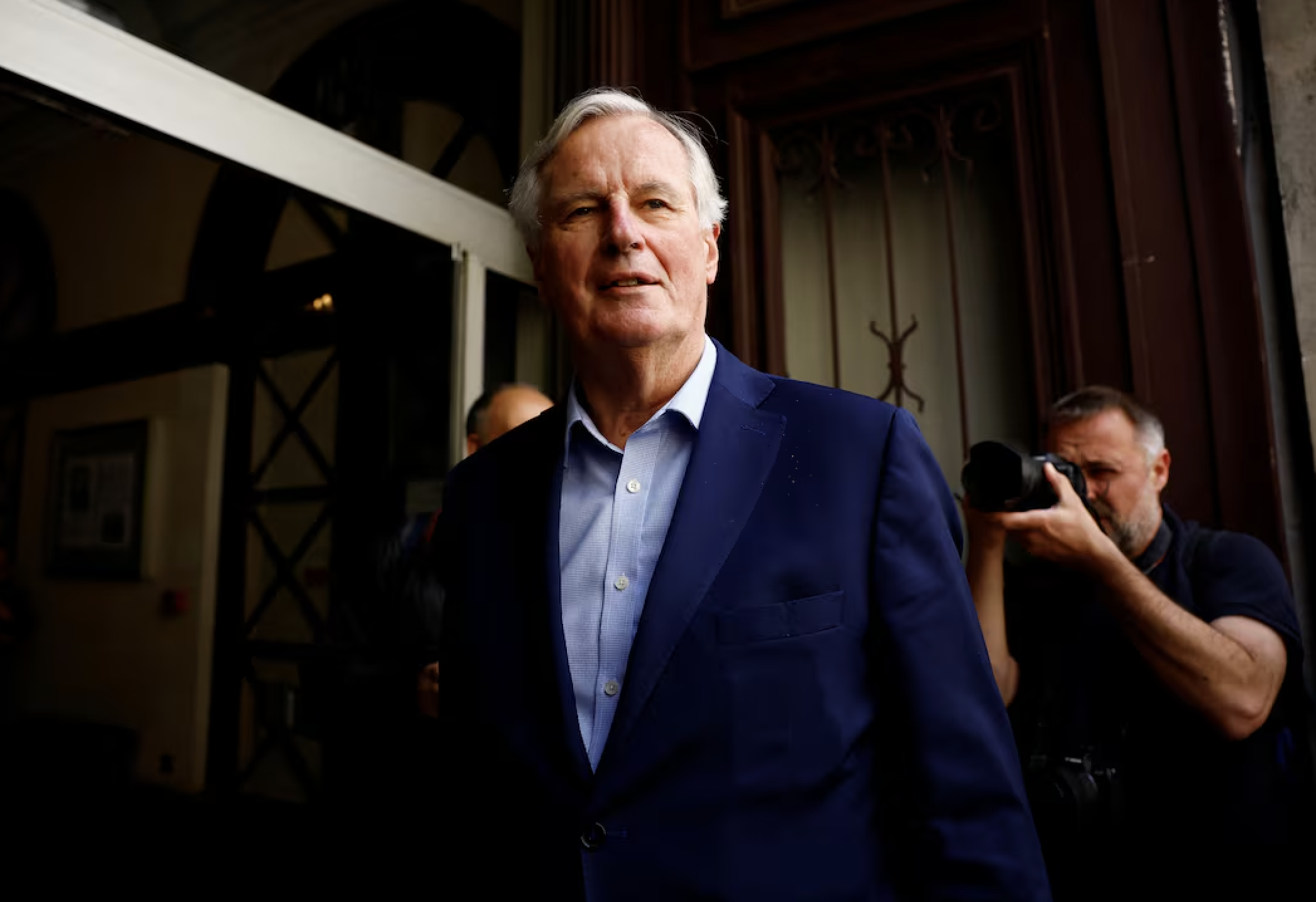
Michel Barnier, ex-french PM.
The end for the prime minister comes only 90 days later when, on 2 December 2024, he invokes Article 49.3 to pass the Social Security budget (PLFSS) for 2025 without a vote, prompting the NFP and RN to combine to censure him out of office, the first time a government has been toppled this way since 1962. This has immediate economic consequences: OAT-Bund spread spikes to 88bp on the same day.
The president scrambles to find a replacement, and on 13 December 2024, François Bayrou is appointed as prime minister. A 73-year-old with failed presidential ambitions like his predecessor, Bayrou had offered the MoDem party’s allegiance to Macron in 2017 instead of running a fourth time, fearing the rise of the far-right; he served as Justice Minister for 34 days before the MoDem funding scandal forced him to exit, for which he was later acquitted. The president chose him due to being well-regarded by the Socialists, allowing him to possibly survive future censure votes. Before he even formed a cabinet, Moody’s cut France’s rating from Aa2 to Aa3, citing the “very low probability” that the country would reduce its deficit due to political fragmentation; the CAC 40 falls by 0.7-0.9% on the same day, France’s benchmark 10-year yield is traded at 3.03%, six basis points shy of Greece’s 3.09%. Five days later, Moody’s downgrades seven major French banks, and the National Assembly is forced to pass an emergency stopgap on 20 December 2024 just to avoid a budgetary paralysis.
On February 3rd 2025, Bayrou’s government pushed through the annual budget (PLF) with the same Article 49.3; however, unlike Barnier, he managed to survive the censure, and on 28 April 2025 he passed the PLFSS after 4 months of legal limbo. In the meantime, on 31 March 2025, Marine Le Pen is convicted of embezzling European funds and is sentenced to five years’ ineligibility, barring her from the 2027 presidential election, another win for ENS and NFP. But this success was just the calm before the storm.
On 15 July, the government unveils its plan for the 2026 budget: €43.8bn in savings, affecting mostly retirees: a full pension freeze “année blanche”, de-indexation from inflation, replacement of the 10% pension allowance with a flat deduction, a frozen income-tax scale, and the elimination of two public holidays. Pushback is immediate: within 24 hours, Force Ouvrière’s Secretary General, Frédéric Souillot, frames Bayrou’s speech as a direct assault on France’s social model, accusing him of weakening public services and targeting the most vulnerable. On 22 July 2025, all eight major unions launched a petition called “Budget Bayrou: ça suffit!” (Bayrou budget enough!), the first time the unions had presented a united front since the 2023 pension-reform battle. With pressure mounting and negotiations going nowhere, on 25 August the prime minister called for a confidence vote on 8 September 2025; immediately, both the RN and NFP announced they would vote against the current government, sealing its fate.
As expected, Bayrou loses the vote; however, Macron, certain beforehand of the outcome, moves quickly this time, and Sébastien Lecornu is appointed prime minister the following day. A long-time Macron ally, the only minister to serve continuously in each government since 2017, he was chosen for his loyalty, with Lecornu describing himself as a “soldier monk” for the president on television. Three days after the appointment, with still no new information to react to, Fitch downgrades France’s rating to A+ while upgrading Spain and Portugal in the same weekend.
The newly appointed prime minister takes his time in forming a cabinet, trying to build a coalition that would be solid enough to survive the autumn budget vote without a censure motion, assuring the unions he would not force things through by decree, marking a break from Bayrou. Finally, after 26 long days, on 5 October 2025 at around 8 pm, the cabinet was announced, with its first meeting set for the following day at 1 pm. On 6 October at 9:50 am, Lecornu resigned; the government had lasted 13 hours and 56 minutes, the shortest in French history.
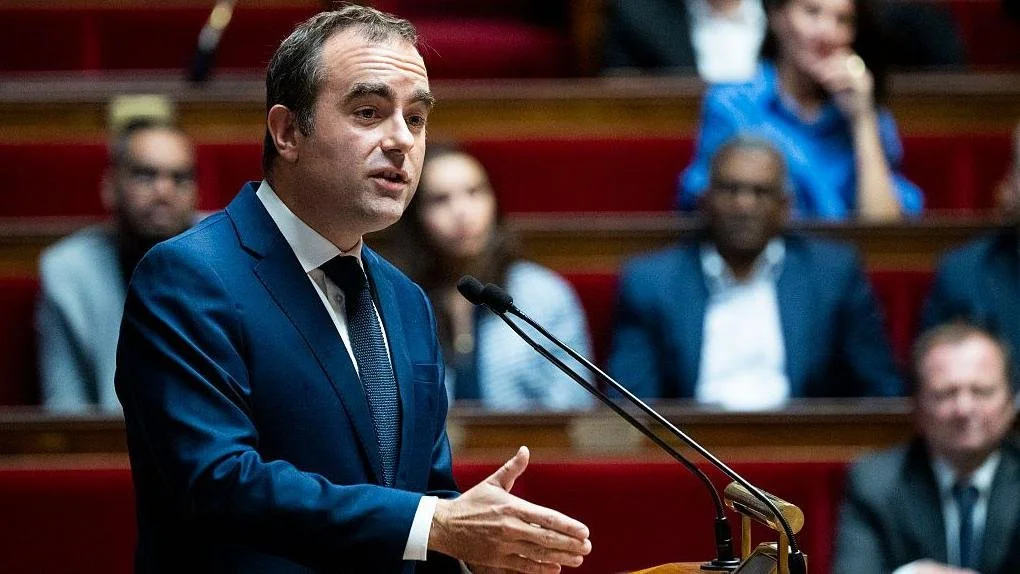
Sèbastien Lecornu, France PM.
The markets panic: immediately after the announcement, the CAC 40 drops by 2%, stabilizing after at around 1.85-1.91% down, the 10-year OAT yield spikes to 3.61% before easing slightly to 3.57-3.58%, the OAT-Bund spread widens to around 85bp, and the euro dips by roughly 0.8% against the dollar, showing that the shock was reaching Europe as a whole. Macron, rather than naming a successor, tasks Lecornu with leading “ultimate negotiations” until Wednesday, warning that if they failed, he would “take his responsibilities”, a phrase that could either mean: dissolving the Assembly or resigning, as opposing parties had demanded, plunging France into deeper political chaos.
Lecornu spends the following days negotiating with the various blocs, and by 8 October 2025 he identifies several blocs potentially willing to agree on a common budget that could be passed by 31 December. Just four days after his resignation, on 10 October 2025, Lecornu was reappointed as prime minister, with him framing his return as an obligation to France and its people. To secure support from the PS, the 2023 pension reform is shelved, sacrificing €11bn worth in savings by 2027, and the 2026 draft budget targets a 4.7-5.0% deficit, accompanied by €30bn of consolidation, which fiscal watchdogs immediately doubt. The RN proposes its own counter-budget claiming €31bn of new revenues and cuts, later scrutinized and found to be lacking credibility by economists. The S&P responds to fiscal paralysis by downgrading France again on 17 October 2025, from AA- to A+, with Moody’s signaling that it might follow on the 24th, and on 18 December 2025, KBRA closes out the year’s ratings actions by downgrading the country to AA-.
On 30 January 2026, Lecornu triggered the third and final use of Article 49.3 to push through the PLF 2026, this time with the support of the PS, breaking the left bloc. In response, two motions for a vote of no confidence were presented, both set for 2 February 2026: one by the LFI, LE, and PCF, the other by the RN. On the said date, the left’s motion is voted on first, drawing only 260 votes, 29 short of the 289 needed; the RN motion follows, managing only 135; the government survives, and the budget is adopted.
But Lecornu's relief is short-lived. On 28 February 2026, the US and Israel launch large-scale, coordinated strikes on Iran, and within 48 hours the European TTF gas index jumps by over 60%; by 3 March 2026 French electricity forward contracts (CAL27) climb from €50/MWh to €57.61, and the country’s reference gas price (PEG) for 2027 rises by 12% in five days. And the storm for Lecornu isn’t calming down. On 15 and 22 March 2026, the two rounds of municipal elections took place; the RN won over 60 municipalities, but, excluding Nice, failed to win any major city, which continued to be held by left and centrist forces. If the far-right’s growing popularity wasn’t enough, the Iran crisis strikes again: due to high energy costs and a surprise -0.1% contraction in Q1, the Banque de France slashes its 2026 growth forecast to 0.5% in June, and in July France’s OAT-Bund spread surpasses Italy’s.
Then the storm reaches its peak. On 7 July 2026, the Paris Court of Appeal upholds Marine Le Pen’s conviction but reduces her ineligibility to 45 months, with 30 suspended. Since her ban took effect in March 2025, those 15 months had already been served, restoring her eligibility. Jordan Bardella, the RN’s fallback candidate, who just 3 days earlier had pledged to put all his energy into electing Le Pen, officially stands aside on 8 July 2026.
This brings us to the situation we have today, but let's step away from the political intrigue and economics to see what this whole timeline has meant for the average French citizen: 60% of people report daily financial difficulties (Ipsos/BVA-CESI barometer), worsened by rising energy prices, with 11% saying they simply can’t manage day to day. With credit ratings at their lowest they have ever been in modern France, and OAT-Bund spread spiking, French debt is now more expensive than it has been in a while, meaning more and more taxpayer money will go towards interest instead of other services; debt-servicing costs have already overtaken defense spending as the state’s largest expenditure, with economists warning the situation could devolve into a debt-doom spiral. The political instability has collapsed trust in national politics, politicians, and institutions to all-time lows (CEVIPOF's Wave 17 barometer), with only trust in local figures and institutions remaining stable (CEVIPOF's Wave 17 barometer). All of this has played to the RN’s populist strategy, with each misfortune befalling the country pushing their poll numbers up, to the point where it’s now the frontrunner for the upcoming 2027 election, turning Macron's warning of a rising far-right into a stark, possible reality for France.
But what would an RN presidency and government look like? How would the party’s closeness to Russia and Trump, paired with its euroscepticism, affect France and the EU? And most importantly, can it step up to the challenge to fix France's current political instability and economic decline?
To answer these questions, we must first lay out what the RN actually proposes. The party has stated three priorities in its 2024 program: purchasing power, security and immigration. The natural place to start is with immigration, a topic we barely touched on in this piece, yet the policies around it stand as the foundation of the RN’s plans and campaign; if applied as the party intends, they would put the country on a collision course with the EU. The policies around immigration are divided into two tiers: the first one includes all laws that may be passed through the ordinary legislative procedures, the second includes all constitutional reforms that would need to be voted on through one or multiple referendums before passing.
The tier one reforms go as follows. Currently, a child born in France to foreign parents automatically acquires citizenship at 18, with early acquisition possible from age 13. The RN would abolish this, making naturalization based on merit and assimilation the only path to citizenship for children born to non-French parents. In France, the offence of irregular residence was abolished in 2012 to comply with CJEU case law on the EU’s Return Directive; the RN would move to restore it as a deterrent for future illegal immigrants. Under current law, family reunification is conditional: 18 months of regular residence with proof of resources and housing; the RN has pledged to end “settlement immigration” and family reunification, not restrict it, end it. In 2024, French authorities issued 145,107 removal orders, to then only record 21,601 departures, an 85% gap the RN has promised to close. Other policies include: withdrawing residence permits for economic inactivity over a year, limiting state medical aid to urgent care only for undocumented migrants, processing asylum only from abroad through embassies and consulates, and restricting access of dual nationals to “strategic posts”.
While these policies may sound radical to some, they have got nothing on those in tier two. The RN doesn’t just want to apply restrictive immigration law; they want to entrench it. In this proposal, the party has promised not only to remove the blocks to more restrictive immigration law, but to put it into the constitution itself, meaning that it would only be reversible through a constitutional revision, an extremely difficult task for any future government. Along with removing the blocks, to further dissuade migrants from coming to France, the RN has proposed a “Priorité nationale” (National Priority) for French citizens in social benefits, housing and employment, with a five-year work condition to access solidarity benefits.
But now we arrive at the two most contentious points, one of which will not just affect immigration, but the way the country operates within Europe. In its program, the RN has proposed to open negotiations with other EU member states to restrict free movement within Schengen to European nationals only, with the addition of permanent controls on the French border. Strangely, however, this is the less controversial of the two. The second proposal regarding the EU calls for a referendum to establish the supremacy of the French Constitution over European jurisprudence, which, if applied, would mean that rulings from Strasbourg or Luxembourg would no longer block actions taken by French governments domestically. In the case of immigration, this would allow France to have immensely more freedom when deciding expulsions, benefit conditions, and border measures. While the RN’s own referendum text is itself confined to immigration matters, the precedent of the French constitution overriding European rulings has no natural boundary and could easily spill over into other disagreements the country may have with the EU.
Let’s now shift to security. In this matter, the ideas aren’t unique to the RN: mandatory minimums for repeat offenders, already present in France under Sarkozy, then abolished in 2014; shifting the age of penal majority from 18 to 16, a position previously gestured by both the Attal and Barnier governments in milder forms; presumption of self-defence for police officers, shifting the burden of proof on prosecutors to show illegal use of the weapon, a demand from the police union.
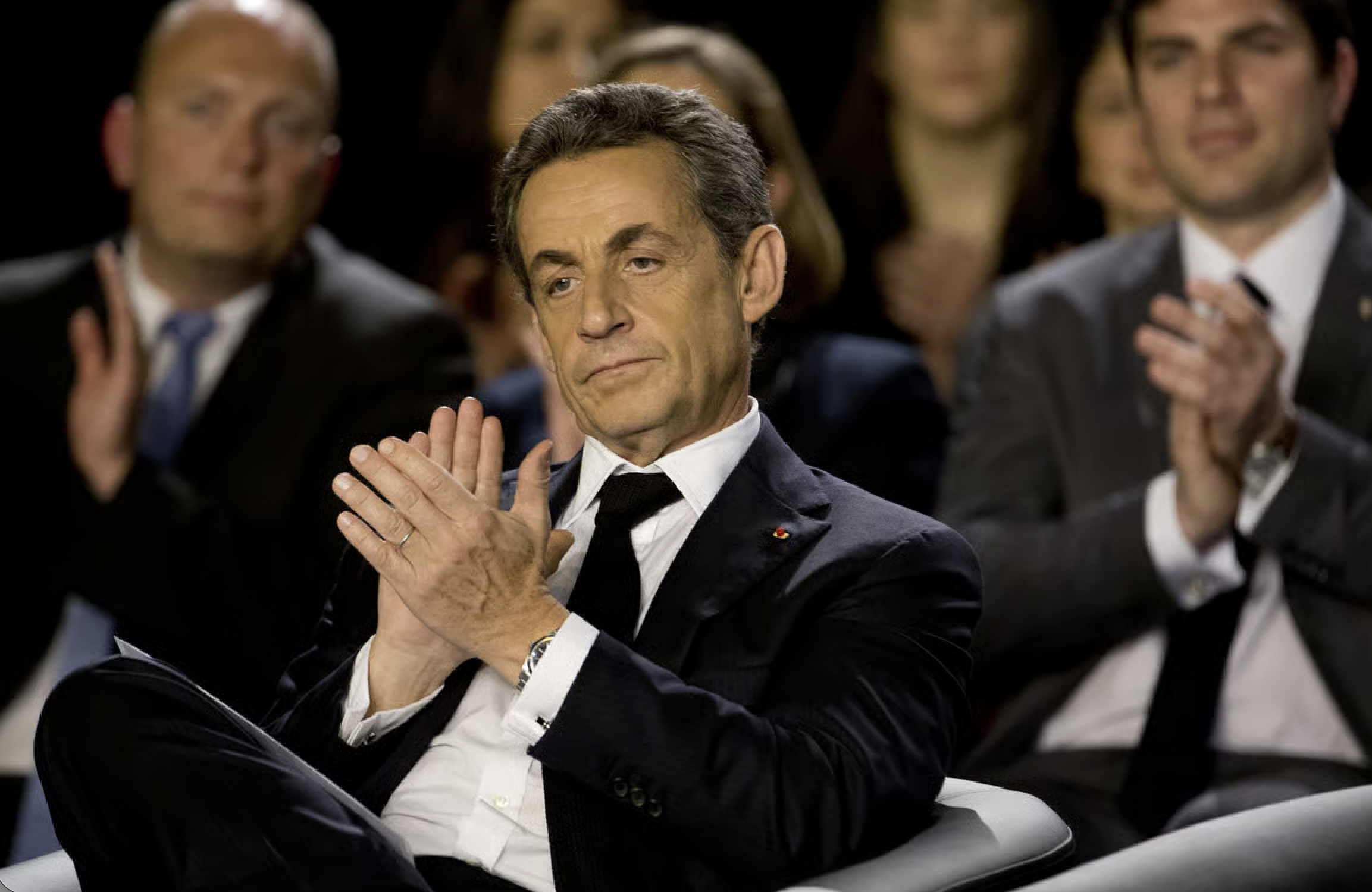
Nicolas Sarkozy, President of France (2007-2012)
The only policies unique to the RN in this matter are the following. Automatic suspension of family allowances for parents of delinquent minors, a law that has precedent in France under Sarkozy, which allowed suspension for major school absenteeism, but it required a case-by-case process, repealed in 2013. To increase security on the streets, the party has proposed to increase the number of police and gendarme forces by 10,000, a strengthened role for municipal police, enhanced legal protection, and the cancellation of ongoing judicial police reforms. To shorten judicial wait times, the RN has pledged to add 10,000 magistrates, doubling their numbers, widening the recruitment to former police officers and ex-lawyers. To solve France’s notorious prison overcrowding, roughly 62,000 places for 80,000 inmates, the party plans for large-scale construction to bring the total number of places to 85,000, while promising to abolish mechanisms that currently relieve pressure, such as the sentence adjustment system, which RN treats as leniency.
Now to the final pillar of the party’s policies: purchasing power. To combat the surge in energy prices, the RN proposes to cut the VAT on energy from 20%, to 5.5%. The reduced rate is already applied to the fixed subscription gas and energy bills; the party plans to expand it to consumption, including motor fuels, which are taxed at the full rate. To push costs down further, the RN would decouple French electricity from the European market’s marginal pricing mechanism, under which the most expensive plant in use in a given hour sets the price, with this model removed French consumers would pay a price based on the historical production of France’s nuclear reactors. The high inflation of recent years has made essential goods more expensive, to alleviate the pressure off French citizens the RN promises to abolish the VAT on 100 essential goods.
To “make work pay” as the party put it, it would introduce three measures. The first policy would create an exemption on employer social contributions on pay rises of 10% up to three times the minimum wage, the party’s alternative to a SMIC hike. The second policy, doubling as a way to combat the brain-drain France is suffering from, the RN would abolish income tax for residents under 30. The third, and final, policy is aimed towards the supply side, with the RN promising to abolish the CVAE production tax on businesses, allowing firms to cut production costs and increase output.
On the demographic side, due to reduced immigration, the RN plans to introduce natalist policies such as lowering the number of children required to receive a full tax quotient share from 3 to 2, and introducing zero-interest loans for young couples, with repayment clauses easing as children are born. The biggest line in the party’s economic program is its pension policy, an open wound for France which has caused multiple nation-wide protests, the RN’s stated policy is to repeal Macron’s pension reforms. The party has promised to scrap the retirement age at 64, restoring it to 62 with 42 contributing years, or retirement at 60 with 40 annuities for those who started working before the age of 20. The party has also promised the re-indexation of pensions to inflation, and raising small pensions.
While not an official policy listed on their program but worth mentioning; an RN France would probably reduce or completely halt additional aid to Ukraine, along with officially opposing any planned increase such as Ukraine in the EU or NATO, troops on the ground, supplying long range weapons, and new joint EU borrowing to fund the war. The party, even though it has recently shifted further away from Russia, with Bardella describing it as a “multidimensional threat to both France and Europe”, has had historically, especially under Marine Le Pen, a particularly close relationship with Putin’s Russia, with it opposing sanctions on energy imports from the start of the war, and voting against or abstaining on almost all later votes on the matter, citing purchasing power grounds.
Meanwhile, what actions the RN intends to take in regards to Donald Trump’s USA is more complex, as it isn’t on the official program and past statements give mixed reactions. Both Le Pen and Bardella have expressed admiration towards the American president, particularly for his patriotism and his fight against immigration, with Bardella stating that his victory was a “great thing for America”, and later the RN’s first vice-president, Louis Aliot, attending Trump’s inauguration in January 2025. This admiration has been largely reciprocated with the US president condemning Le Pen’s conviction in March 2025 as a “witch hunt”. However, lately, the RN has strategically moved away from Trump, as he is widely unpopular within the French public, possibly taking Orban’s loss in Hungary as a warning of what closeness to Trump could bring. Le Pen has condemned both the US’ strikes in Venezuela and the war in Iran, and Bardella, while not explicitly condemning the war, had previously drew fire from the American right. This was due to his last minute retreat from giving a speech at CPAC after Steve Bannon made what Bardella called “a gesture alluding to Nazi ideology”, in line with the RN’s strategy of distancing itself from its founders’ collaborationism and antisemitism. Both Le Pen and Bardella have condemned US tariffs, though both politicians have continued to state that the US is a valuable ally to France and Europe.
Will the RN be able to implement all of these policies? To put it bluntly, no. Will the attempt still carry serious consequences for France and Europe? Absolutely, here is why. Even if the RN wins the presidential election, its president would have to deal with the current National Assembly until 2029, in which it is far from the majority, and the other blocs are unlikely to cooperate with it on measures that matter. If the RN wins, Le Pen could dissolve the chamber and call for new elections, which has been alluded to by Bardella. But it would be a risky gamble, one that both Chirac in 1997 and Macron in 2024 lost, as France, if the current situation doesn’t change, will still be a politically divided country, making an RN majority far from certain.
But let’s say Le Pen decides to dissolve the National Assembly, a snap election happens in 2027, and the RN wins a majority, it still would have four major problems, which it would have in any scenario: the French Constitution, the EU, the European Court of Human Rights, and the bond market. The RN itself has recognized that some of their policies need constitutional reforms, but even those that theoretically could be passed with ordinary legislative procedures have had similar predecessors, that were contested by the Conseil costitutionnel, France’s constitutional court, in some cases on procedural grounds and not necessarily on substance, but with objections clearly signaled.
A clear example of this would be the abolition of birthright citizenship. While the RN claims this could be passed without a constitutional referendum, a much milder version of the law, requiring a statement of intent instead of giving citizenship automatically after the 18th birthday, was censured by the court on procedural grounds. Another tier one policy at risk of being blocked by the Conseil costitutionnel is the abolition of family reunification, which the court declared a formal right in 1993 on a preamble of the 1946 constitution, and on top of that sit the ECHR’s article 8 and the EU’s 2003 directive on family reunification. Another preamble from 1946 also protects asylum seeking inside France, having them processed abroad goes directly in opposition to that. The last major tier one immigration policy that would face push back from the court is the revocation to “strategic posts” for dual-citizens, as France has no classifications between citizens.
On the security front, it’s probable that the court will oppose the lowering of the age of penal majority, as it has since 2002 held the principle that the attenuated responsibility for minors, with the primacy of educative responses over punitive ones, a fundamental principle recognized by the laws of the republic. Even laws previously applied, like the minimum sentences and the suspension of family allowances due to minor’s behavior, were only allowed by the court because the former allowed judges to derogate, and the latter required a case-by-case process, by making the processes automatic, the RN would remove those shields. Most importantly for the RN, the court has the authority to decide on the legality of referendums, meaning even attempts at reforming the constitution may be potentially blocked.
These are just the policies that would put it in contrast with the Conseil costitutionnel, then there is France’s Conseil d’État, the country’s supreme administrative court. This is the tribunal that would handle day to day executive decisions by an RN government, such as expulsion orders, definitions in their laws, border regulations, AME restrictions, and many other measures. If current laws remained unchanged, RN would find itself in conflict with the court daily. With France’s legislative and judicial landscape as it is, if the RN intends to fulfill its promises, it is headed towards an inevitable fight with the magistrature, creating further instability in the country in one of the few environments where there was little.
Going outside of the domestic view, the clash with the EU would shake up the geopolitical landscape beyond the years of the RN. France was one of the six founding members of the European Coal and Steel Community, since then it has played a key role in every evolution of the European project, and recently, along with Germany through the Paris-Berlin Axis, was the dominant power in the EU pushing for further integration. The RN would completely reverse this trajectory, and unlike domestic measures, EU decisions fall directly under the domaine réservé of the French presidency, meaning the country’s actions inside the Union require no approval from back home. Due to this, the measures regarding the EU are, with the exception of those that would require a referendum and ordinary legislation, the most likely and fastest to materialize. Through executive action, a RN presidency could: select European Council seats, decide on treaty diplomacy, block potential defense deployments, refuse new EU joint borrowing, oppose the renewal of Russian sanctions, frozen asset mechanism for Ukraine, along with EU/Nato accession, cut €8.7bn in EU contributions, and generally obstruct MFF and enlargement of the Union. All other policies would need to pass through the National Assembly or via referendum.
Though even just with the executive measures, the EU’s reaction would come swiftly. The Union’s enforcement toolkit consists of four levers. At first there would be infringement proceedings, meaning a formal notice, reasoned opinion and a referral to the CJEU, a first judgment carries no real penalty, with only sustained non-compliance over the span of 2-4 years activates lump sums and daily penalties as stated in Article 260. What could hurt France much faster if applied however is Article 279’s interim relief, daily fines as litigation continues, which had cost Poland around €500,000 a day for the period it lasted. Changes to the constitution, such as French constitutional primacy over European directives, could also trigger additional fines by the CJEU, which has a precedent again with Poland, as the court fined the country a record-breaking €1M a day for its judicial independence breaches unaligned with EU directives. The contributions withheld would also add up with additional interest, creating a ticking time-bomb of an expense for an eventual government that would want to resume them. Furthermore, the EU could freeze France’s cohesion funds, totaling €15.745bn from 2021-2027. Finally there is the nuclear economic option: the excessive deficit fines, equaling 0.05% of GDP, unlikely, as it has never been applied on a member state in breach of the 3% of deficit threshold, but with the scale and consequences of the RN’s policies unprecedented for the Union, the response to such provocations is unpredictable. The politically nuclear option would be the suspension of France’s voting powers in the EU, however this requires unanimity across all members, excluding the country being voted on. This penalty has never succeeded in its application, not even with Poland and Hungary, as it takes just one member to shield another, and the RN has been courting allies, such as Giorgia Meloni’s Italy, to protect France from this measure.
This last lever aside, would the others persuade the RN to capitulate on its EU reforms? In all likelihood, no, as it stands in a much stronger position than either Poland or Hungary were when these measures were used on them. Both Poland and Hungary are net-beneficiaries from EU funding, in contrast France is the Union’s second largest net-contributor after Germany, so penalties would not have the same impact it had in the cases of Warsaw’s and Budapest’s non-compliance. However the EU has inflows it can target. France is the Union’s largest beneficiary of the Common Agricultural Policy, receiving around €66bn in between 2021-2027 according to Touteleurope. Revoking these funds would put immense pressure on French farmers, a voter base in which the RN regularly leads in polls and elections, weakening the party’s stance in an already politically divided country, or force it to replace billions in subsidies, which France at the moment cannot afford without increasing the already high deficit, facing the opposition from the more fiscally conservative forces in the National Assembly.
If the RN does not back down from its policies the EU would face both geopolitical and internal turmoil. By reversing France’s position on Ukraine, currently co-chair of the Coalition of the Willing, the EU would be weaker against Russia, fomenting further internal division, lessening its impact on the world stage, and preventing further integration by blocking new joint borrowing, a key point of Mario Draghi’s plan for an economically stronger Europe. This could not come at a worse time. If there aren’t significant changes in the current geopolitical climate, the EU would need stronger political cohesion to stand against an economically and diplomatically hostile USA under Trump, trade encroachments by China, which has been pushing its goods to Europe to diversify away from the US, and the current situation in Iran.
More dangerous for Europe may be however the precedents the RN would set if successful in implementing its policies. While constitutional primacy has been implemented before by Poland, the attempt failed with EU pressure contributing and Donald Tusk winning the country’s election, if France were to do it successfully however using their position of strength, the EU’s enforcement power would certainly suffer both image wise and practically. Seeing this, some member states, particularly Germany if it came under the rule of the AFD, might decide to follow, gutting the EU’s enforcement power, to the point where it would risk being reduced to a paper tiger.
But a precedent that some member states would realistically follow sooner, due to the rise of anti-immigration sentiments in the EU, would be the limitations on Schengen, which if the Union fails to crack down upon, would significantly reduce freedom of movement inside the EU. This policy in particular could have potential economic consequences for France, as limitations on freedom of movement have their costs on importers and exporters, along with the costs associated to enforce it. France’s official strategy and planning body, Haut-commissariat à la stratégie et au plan, has run a study on what the cost would be if Schengen were abandoned by all member states, specifying exact costs for France. While it can’t accurately predict precise costs if only France were to reduce freedom of movement across its borders, it can give us an idea of the potential cost.
France Stratégie estimates the direct loss of €1-2bn depending on the scale of border control, without counting budgetary costs of enforcement, plus another approximate €62M per year on importers, and roughly the same on exporters, reaching the total figure of approximately €124M, a number which would double if controls are implemented to their maximum extent. France Stratégie estimates the loss of between 5000 to 10,000 cross-border workers, costing the economy €150-300M yearly. The medium to long-term consequences, if controls become permanent and applied across the entire Schengen area, put the cost as an equivalent of a 3% trade tax across the EU, a total loss of €100bn, or 0.8% of the bloc’s GDP over a decade, with a loss of €10bn annually for France and a half point reduction in GDP. While I would like to remind is that this is a scenario studied by France Stratégie in which the whole Schengen area imposes controls, however it suggests that even if France alone imposed border checks, it would suffer an economic loss depending on the extent of control.
This brings us to the bond markets, how would they react to the RN policies effect on internal and external politics, economy, and more specifically its budget? At present, 52% of France’s public debt is foreign held according to its senate report on the issue, making it the highest among the four major European economies. The consequence for this, according to the IMF, is its bonds are particularly reactive to changes in the country, which has been shown by France paying an approximate 21bp premium (OMFIF) on them, due to its political instability and paralysis, €34bn that in 2025 went to non-resident creditors. France’s chronic deficits in particular have been cited multiple times by rating agencies to justify their downgrades, and an RN France isn’t likely to make the situation any better, in fact it might make it worse.
We have already touched on the cost of limiting Schengen, however that is just the tip of the iceberg. The RN claimed, during Lecornu’s PLF negotiations, that with its counter-budget the country would create €31bn in new revenues, produce €50bn in spending cuts, offset by €14bn in tax cuts, claiming a total of €36bn, never reconciling these figures; while this is not the 2027 campaign’s official numbers for the cost of their measures, those had not been officially disclosed as of yet, it’s the only thing analysts have to go on at the moment from the party itself. These numbers were found lacking by economists even then, and estimates for the RN’s official program are staggering. Institut Montaigne analyzed the RN’s policies, and came up with two figures for the actual cost of the measures: an annual deficit deterioration of €101.8bn, with €119.6bn of new spending, for full 2022 presidential program, and €71bn annually of deterioration, with €85bn of new spending, for the slimmed down 2024 legislative program.
Let’s take a look at the most recent figures, as those are the most likely to be implemented. Revoking the 2023 pension reform alone would cost an estimated €34.7bn, with an additional €950M if tax exemptions for doctors coming out of retirement are implemented. €18bn in total for VAT cuts, €5.1bn for CVAE cuts, €3.4bn for full tax quotient from the second child, €12.6bn zero interest loans/grants, €3.7bn for the under thirties tax exemption, with the addition of €700M for under thirties business-income tax exemptions, €7.3bn for changes in inheritance laws, €5.8bn for an increase in teachers’ pay, €1.5bn for new prison construction, €800M for employer contribution cuts for pay raises of 10% for wages 3 times the minimum wage, €300M for mandatory municipal police, plus €2.4bn in other expenses. For those keeping count, this adds up to €97.41bn, which is a discrepancy of €12.41bn that the Institut Montaigne doesn’t address on its official page, and no other outlet seems to be reporting on, the reason why is unknown.
The RN’s policies, according to the Institut Montaigne, would also produce approximately €14bn in savings, and this figure checks out with estimates posted on its official page. The numbers go as follows: €3.8bn from restricting family allowances to households with a French parent, €2.6bn from conditionality of RSA/Solidarity benefits to 5 years of full time work in France, €2bn from the privatization of public broadcasting, €700M from restricting AME to urgent care only, €2M from the suspension of family allowances for parents of repeat minor offenders, €3.6bn from abolishing regional healthcare agencies and cutting hospital administration, €1.2bn from asylum policy reforms.
Suffice to say, an increase of this size on the already high French deficit would not please rating agencies, with Fitch declaring that further fiscal drift would trigger its next action. Investors as well would not be pleased. Capital Economics’ chief Europe economist has warned that even implementing half of the program would cause what she called “a sort of freak-out moment” in French bond markets. This would make France’s public debt-servicing costs truly record breaking, adding billions in permanent interest payments that French taxpayers would have to pay. This would guarantee further economic decline and true descent in a debt-doom spiral that the country may not be able to escape from.
The spectre, as it seems, if it were to descend upon France, would settle and haunt not only the country but the continent for years to come. The promised revolution of the RN would be another chaotic one for France, with clashes over each policy digging a deeper pit of instability for the country, from which it might not climb back out. And this could be a best-case scenario, as fighting irreconcilable political opposition, the Conseil Constitutionnel, European courts, or the EU over each policy would come at a great cost for France. But as this analysis shows, it might be cheaper for the country than if the RN were successful in passing its program. The European Union would certainly weaken, as the Elysèe’s authority over foreign policy doesn’t need domestic approval, meaning a majority of its decisions would not be able to be contested by the more euro-centric forces in the National Assembly. The few that would need approval from the legislative body, if passed, risk destroying the fundamental principles on which the European experiment in its current form was founded. This could not come at a worse time for the continent. Under siege from the West, with Donald Trump’s tariff threats and military ambitions, and from the East, with China flooding European markets with its goods, destroying local industry, and Russia continuing its march ever deeper into Ukraine.
The latter in particular would gain particular benefit; a French retreat from being Ukraine’s strongest voice on the world stage, to becoming the next Orban, blocking action or further aid to the country, would make a Russian defeat all the more unlikely. What’s worse, France’s economic decline would not reverse, not even halt, but the hammer of the market, if the RN’s policies were implemented, would come down at its hardest, ending any chance for the country not to fall into a debt-doom spiral of its own making, eroding one of the world’s wealthiest nations and its taxpayer funds in interest payments along with it. In a geopolitical climate where only the strong survive, neither France nor Europe can afford further erosion of their positions on the world stage, and if they do not prevent it, they will pay dearly. As of now, these are all predictions based on data from the current political and economic landscape of France. With the first round of the election set for April 2027, still nine months away, this could change in the future, and if it does, the Financier Review will keep you updated.