The Magnitsky Law
Convention against Corruption · 31 October 2003
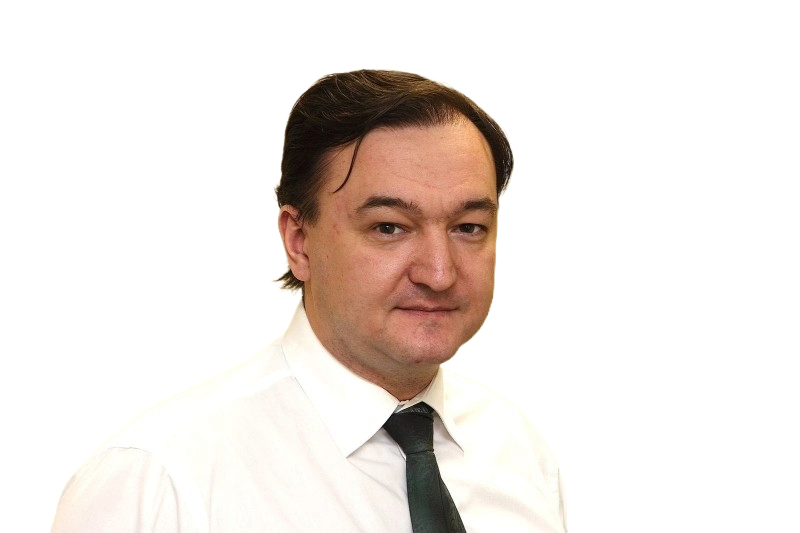
Sergei Magnitsky, Russian Tax Lawyer responsible for uncovering a $230 million state corruption scheme.
Corruption is one of the biggest issues in contemporary politics. Many states are struggling to find a universal solution to this problem, despite the already existing constitutional safeguards and the problem is far from being resolved. Consequently, the existence of such problem raises several important questions: what is corruption, why does it occur and what happens when individuals are engaged in it?
One of the most influential legal response to corruption and serious human rights abuses emerged after the death of a Russian tax lawyer – Sergei Magnitsky.
Corruption is generally defined, although some would argue that no universally accepted definition exists, as the abuse of entrusted power for personal or private gain. The benefit does not always need to be financial. It can include securing employment or better jobs for relatives, known as nepotism, or favoring friends, also called cronyism. When applied to public life, corruption is a destructive influence. It undermines entrusted power and consequently leads to violations of human rights. When scholars try to describe corruption, they mainly associate it with the public sector. Robert Klitgaard, an American academic, in his work Corrupt Cities: A Practical Guide to Cure and Prevention (2000), defines corruption as the misuse of public office for private gain.[i] Corruption can be internal- for example, embezzlement- or external - for example, extortion. No matter what the precise definition is, there is one universal consensus: corruption is particularly dangerous once it captures a significant portion of the public sector.
There are many corruption scandals all over the world. However, one of the most significant internationally is the case of the Russian tax adviser, Sergei Magnitsky. His name became famous in 2008 because he exposed a corruption scheme and misconduct allegedly committed by Russian state officials. He was later arrested, imprisoned, and mistreated, which ultimately led to his death in 2009. The reaction from the international community resulted in the adoption of similar legislation around the world targeting individuals allegedly associated with Magnitsky's detention, abuse, and death, and later strengthened the international legal framework against individuals allegedly connected with corruption and serious human rights abuses.
Bill Browder, an American British financier and political activist, co-founded Hermitage Capital Management, the biggest foreign investment fund in Russia, managing almost US$4.5 billion. He and Edmond Safra, a Lebanese-born banker and billionaire, founded Hermitage Capital Management in 1996, a hedge fund for foreign investments in Russia. The initial estimated capital was US$25 million.[ii] Bill Browder was the driving force in Moscow; he was responsible for directing the investment strategy and deciding which Russian equities to buy, such as shares in Gazprom. Browder considered himself a "shareholder rights activist"; however, it was out of financial survival. He realized that if he did not expose corruption, the oligarchs would steal from his fund.
In 1998, Russia experienced a massive economic crash. Amid the chaos, powerful Russian oligarchs began stealing money and assets from the companies Browder had invested in. The financier knew he had to do something; otherwise, the oligarchs would steal everything his company had, leaving him with nothing. He knew he couldn't use the Russian courts because they were corrupted. Instead, he hired investigators to find proof of the theft. Whenever they found something, even a small shred of evidence, he gave it to Western newspapers. This resulted in public embarrassment, which forced the Russian companies and oligarchs to stop the theft. Consequently, once the stealing had stopped, the companies became valuable again, and Browder made a lot of money.
However, the twist happened after the death of Edmond Safra in 1999. By 2005, Browder's resistance had made the Russian government angry, and they forced him to leave the country, classifying him as a threat to national security. What happened two years later was the turning point of the whole story.
In 2007, corrupt Russian police officers raided Hermitage's offices in Moscow and stole Browder's official stamps and corporate documents. According to Browder, these materials were later used to transfer ownership of Hermitage's subsidiary companies to members of a Russian criminal organisation. The perpetrators changed the information contained in the documents, fabricated non-existent financial losses, and then requested a fraudulent US$230 million tax rebate by claiming a refund on the taxes legitimately paid by Hermitage.[iv] The Russian Treasury approved and paid the entire amount.
In 2007, Sergey Magnitsky acted as the lead investigator who uncovered the Russian officials allegedly involved in the fraud against Hermitage. At the time, Magnitsky was a 35-year-old Russian tax adviser. After Browder was expelled from Russia, he was hired to determine what the corrupt state officials were doing. Magnitsky worked at the American law firm Firestone Duncan in Moscow and had been investigating financial fraud for years.[v] By late autumn of the same year, he discovered that the stolen corporate documents had been used to secretly register Hermitage's holding companies in the names of Russian criminal groups.
In late 2008, Magnitsky formally testified before Russian prosecutors, naming the police officers whom he alleged had stolen the company. One month later, those same officers arrested Magnitsky at his home. He was imprisoned in Moscow, mistreated, and almost starved to death in an attempt to force him to sign a confession stating that he and Browder had stolen the money. Magnitsky refused. On 16 November 2009, his condition became critical, and he died at the age of 37.
An interesting fact is that, in 2013, the Russian government put the already deceased Magnitsky on trial. A Russian court found Magnitsky and Browder guilty of fraud involving US$15 million in budget funds, while Browder was convicted in absentia. Eventually, the court found the deceased lawyer guilty.[vii]
The geopolitical response was initiated by William Browder. He abandoned his investment career and started advocating for the protection of human rights, travelling directly to Washington, D.C. Browder lobbied Western governments to enact sanctions against the Russian officials allegedly involved in Magnitsky's detention, brutal mistreatment, and death. He sought justice and pitched his ideas to American politicians in an effort to introduce formal legislation. Senator Benjamin Cardin (Democrat) initiated the legislative process by submitting a list of 60 Russian officials allegedly involved in the fraud to the U.S. Department of State, requesting that their visas be blocked.
The bill faced resistance from the Obama administration because it feared that diplomatic relations with Russia would be damaged. However, in late 2012, the U.S. Congress passed the bill by an overwhelming majority (92–4 in the Senate),[ix]and the Russia and Moldova Jackson - Vanik Repeal and Sergei Magnitsky Rule of Law Accountability Act of 2012 was enacted.
The reaction of the Russian Federation was immediate. Vladimir Putin signed the Dima Yakovlev Law, which prohibited American families from adopting Russian orphans.[x] Furthermore, the law authorised the freezing of the assets of certain U.S. citizens. One of the main controversies was that the legislation also affected adoption procedures that were already underway. It immediately froze the paperwork of hundreds of children, many of whom had mental or physical disabilities. Putin used the orphans as a political shield to demonstrate Moscow's disagreement with the new Magnitsky Act, creating a painful human cost.
Furthermore, Putin also imposed visa bans on Americans by targeting U.S. officials involved in human rights investigations, as well as prominent American lawmakers. Over the following years, this developed into a broader diplomatic confrontation between the two countries. Nevertheless, many states around the world adopted similar legislation, including the United Kingdom, Canada, and Australia. The European Union later introduced its own sanctions regime based on the same principles, applicable across all Member States. Additionally, several countries adopted their own independent Magnitsky style legislation, including Estonia, Latvia, Lithuania, Kosovo, Iceland, Norway, and Gibraltar. In 2016, The U.S. expanded the scope through the Global Magnitsky Act, allowing sanctions against human rights abusers and corrupt actors from any nation.
The Legal mechanism of the Magnitsky Act is multi-step process. The main idea is not to sanction an entire country but use the power of the U.S. treasury to isolate specific corrupt individual by imposing economic pressure on them.
The process begins with submission of names of alleged corrupt individuals and human rights abusers to the U.S. government. The primary groups which can submit evidence are Members of the Congress, Human rights organizations and NGOs [xi] (as well as U.S. internal agencies. When submitting names, submitters provide dossier containing credible evidence - bank records, court documents or investigative journalism proving violations of human rights. The Executive Branch is legally mandated to evaluate the dossier and response within 120 days saying whether sanctions will be imposed.[xii]
Once the dossier is submitted, it undergoes a legal review across several U.S. departments. Under Executive Order 13818[xiii], the State Department evaluates if the individual or entity meets the legal criteria for human designation, Justice Department reviews the legal validity of the evidence, and The Treasury Department identifies hidden assets, bank accounts or corporate shell companies tied to the target.
Authority to execute sanctions is delegated to the Secretary of the Treasury in consultation with the Secretary of State and Attorney General. Once approved, whether an entity or an individual, is added to the Specially Designated Nationals (SDN) List[xiv] .This initiates the following legal actions. All property and financial assets within the U.S jurisdiction or in the control of the U.S. are immediately blocked[xv]. Any business or entity owned 50% or more by the sanctioned individual are blocked by the Office of Foreign Assets Control (even if the entity is not mentioned in the SDN List)[xvi] . In addition, the targeted individual’s U.S. visa is instantly revoked, therefore they cannot enter the United States[xvii].
Even if a corrupt official or entity does not have a bank account inside the United States, they are effectively shut out of the global banking system. Standard international transactions, including wire transfers between European, Middel Eastern or Asian banks, almost always process in U.S. dollars through corresponded banking accounts located primarily in New York.
Furthermore, if a non-U.S. bank refuse to comply with Magnitsky Act and continues to do business with sanctioned individual, the U.S. government can ban the entire bank from using the U.S. financial system.
The Magnitsky sanctions are subjects of ongoing legal disputes. One of the main legal questions is whether the enforcement of the sanctions is fair.
One of the main concerns for many legal critics is the lack of a pre-designation notice. Under the Fifth Amendment and Article 6 of the European Convention on Human Rights, governments have the obligation to provide an opportunity or safeguards to be heard before blocking one party's property. On the other hand, regulators argue that providing advance notice would undermine the efficiency of the sanctions. For instance, the alleged target would transfer its money to a shell company before the freeze takes effect; therefore, the sanction is avoided .
Another legal issue is state sovereignty. From an international law perspective, the Magnitsky sanctions can be interpreted as a test of the boundaries of territorial jurisdiction. When sanctions are imposed to penalize conduct, such as domestic corruption, targeted states condemn these measures because they believe that no foreign government has the right to judge how their own courts and police are run. On the other hand, countries issuing the sanctions argue that blocking access to their own borders and financial systems is completely in accordance with every norm.
Even if Magnitsky sanctions become more effective, corrupt individuals have developed ways to get around them. Under the 50 Percent Rule, a business is automatically blocked only if a sanctioned person officially owns 50% or more of it. What corrupt individuals often do is hide their ownership behind shell companies or family members while officially keeping their ownership below the 50% threshold and still engaging in corruption in secret.
At the same time, many sanctioned actors are moving away from their original physical banks altogether. Alternatively, they use digital tools such as cryptocurrencies to move their assets between borders while reducing their exposure to the radar of the Western financial system.
Still, the general consensus is that the Magnitsky laws have changed how countries deal with human rights abusers and state corruption. Major economies such as the United States, Canada, the United Kingdom, Australia, and the European Union all use analogical legal frameworks based on the same principles. In this way, the abuse of entrusted public power is challenged through financial sanctions, which are coordinated between states, sending a clear message that doing business in the international financial system is reserved for those who respect basic human rights and the rule of law.
The Financier Review.