When Investors Cheer the Politics of Order: Far-Right Parties and Financial Markets in Latin America.
When the far-right in Latin America is mentioned, the line of thought usually goes to Argentina and the presidency of Javier Milei, who has become maybe the most internationally visible and polarizing leader in the region. Milei is self-described not as a traditional conservative, but as a libertarian anarcho-capitalist, he has taken power after the elections in 2023 to become the first far-right elected president of Argentina. But he is not the only one in the region.
Today right-wing parties hold power in 13 Latin American countries and when compared to around a decade ago, when progressive governments were spread across the region, the rise of the right becomes very clear.
The first notable step in that direction was Bolsonaro’s election as president of Brazil in October 2018. But the change didn’t come out of nowhere. Despite central governments at the time were still left and centre-left, in some regional councils right politicians have started to gain momentum, and after Bolsonaro came in power the far-right’s influence across the continent significantly increased. In the next year Bukele, another far-right candidate, became president in El Salvador. He identifies himself as the “world’s coolest dictator” and despite being highly criticised by international human rights organizations, he has won the support of the nation for diminishing crime levels with homicide rates falling three times in just a year. (Pozzebon, 2024). Then, in 2020, Luis Abinader defeated the opposition in the Dominican Republic, marking another transition towards the right-wing and ending the 16 years period of governance by the centre-left party. He was reelected in 2024. The next country in the region that has switched to a right wing governance was Costa Rica, when Rodrigo Chaves was elected in 2022 and this year his “handpicked” successor Laura
Fernández has won with one of the most decisive victories in the country’s history. (Meléndez-Sánchez & Perelló, 2026). In 2023 the right-wing rise of influence was confirmed once again when Daniel Noboa won in Ecuador and Luis Abinader took power in Paraguay, then the next year José Raúl Mulino was elected in Panamá. A massive hit on the left in the region was the end of the 19-year almost uninterrupted rule of the MAS party in Bolivia, when Rodrigo Paz won the presidential elections last year. And in December 2025 Nasry Asfura won in Honduras, marking yet another shift of directions towards conservatism. In Chile the leader is perceived as one of the most radical - the open supporter of Pinochet’s dictatorship José Antonio Kast has won the elections in late 2025 and has stepped into the presidency in January of this year. Peru is another case of a transition from a left government, even though there the situation is a bit different. The left-wing president Pedro Castillo, elected in 2021, was removed from the position and was inherited by the former “Perú Libre” representative Dina Boluarde, who after assuming the position, was expelled from the left-wing party and has formed rather unusual alliances with some conservative fractions. After her impeachment the right-leaning José Jeri became the President temporary and following various delays, elections were held recently - in June 2026. The elected winner Keiko Fujimori is the daughter of former Peruvian president Alberto Fujimori, and despite the small margin in the second round, she was the expected winner for many from the beginning of the campaign. Another recent shift is the one in Colombia, where during the last four year term the left had the power in the face of Gustavo Petro but the opposition had just won the election’s runoff last Sunday with the far-right millionaire lawyer Abelardo de la Espriella, who is to become the next president.
But what distinguishes the right-wing political movement? And the far-right? Well, historically the division between the left and the right emerged as a result from the separation between the established elites, who took inequalities as normal social phenomenon that didn’t need any state intervention to be regulated and the supporters of a new regime, that benefited the lower classes through state support, because for them inequalities were socially constructed. (Rovira Kaltwasser, 2023). This difference is at the root of both philosophies, therefore it is logical for right-leaning governments to prioritise the private sector, to aim for constraining fiscal policies and budget surplus and impose austerity measures.
The far-right emerged in the late 20th century with the emergence of the idea of ethnopluralism stating that inequalities between ethnicities are natural, because ethnicities are inherently different from one another. That is also the reason behind the anti-migration position of those parties in Europe. In Latin America there is no such problem, but the separation between ethnic groups persists - indigenous minorities for example still suffer from discrimination and restraint opportunities. Additionally, very often the Latin American far-right focuses on the opposition to other aspects of the progressive line of action like gender equality and women rights. The populist narrative often relates the shift in the dynamic between social groups, provoked by the increasing significance of minority rights, with a threat to “Christian values” and a corruption of society (Arias & Burt, 2023; Mayka and Smith, 2021). Rovira (2023) defines two further criteria for separating the far-right from the mainstream right. In the first place is the party’s positioning - whether they have moderate or radical positions. In the second place is their stance on democracy - usually far-right leaders disdain the liberal democracy and support more autocratic forms of governance.
The right-wing affiliation of the mentioned in the first section newly elected ruling elites in the region is indisputable. The majority of them have opposed the incumbent left parties, criticising them for their overspending and budget deficits and the spiking inflation that has become a huge problem in the last decade. During his campaign Javier Milei promised and later implemented a reduction in state spendings to reduce the fiscal deficit. De la Espriella has promised to cut taxes, while many describe him as market-friendly, because instead of increasing taxes for the business he considers expanding the tax base by including more actors as obligatory taxpayers.

Javier Milei, 57th President of Argentina.
They are also generally more radical and less democratic than mainstream parties. A significant role in all of the campaigns play the planned measures against organised crime. The case of El Salvador is a good example - Bukele’s government has visibly reduced crime rates (Statista Research Department, 2026) through radical and unconventional violent policies that had resulted in criticism from international human-right organisations claiming the erosion of democracy in the country.
Another trait that classifies those political movements as far-right is the often used populistic approach. Support is often gained by finding topics that polarise the population and pull voters away from other political coalitions. Social media is the primary tool used during campaigns while there is also a distinctive anti-elitist rhetoric that builds on the numerous corruption scandals the left was lately a part of (Arias & Burt, 2023).
But despite some of the questionable stands of those parties their growing influence is more or less logical. Arias and Burt describe the Latin American far-right as “a home-grown phenomenon” and state that the success of conservative politics follows the colonial logic of traditional power distribution within the household and between different social actors while its emergence right now is a consequence of the crisis of the left that held the power for quite a long time. The economic crises that the countries in the region faced were due to the sudden fall in the global prices of extractive commodities and since the distributive social system of the progressive governments depended on the foreign money from row materials exports, the whole model of the left started to collapse - inflation rose, fiscal deficits and foreign debts as well. However, the shift towards the right is not due to a change in ideology, on the contrary actually, empirical evidence rejects a conservative shift in the voters, actually more and more people have positive attitudes toward some progressive ideas and support for minority rights among the voters increases (Rovira Kaltwasser, 2023; Mayka & Smith, 2021).
The rise of the right is a result of economic voting. Citizens want change, because they no longer support the current government and the only option for them is the rather new far-right alternative. The mainstream right is also in some sort of a crisis, it faces critiques for being way too moderate and doesn’t achieve to convince the voters that a change would happen fast and effective enough. As already mentioned, security plays a big role as well. In Chile for example, despite actually lower crime rates than most countries in the region, the perceived danger is higher therefore Kast’s campaign supporting tougher anti-crime measures worked well. International relations are another important factor - Latin America needs to maintain good relations both with the US, which has a lot of influence due to its economic power and China - one of the most significant trading partners to the countries in South America. Far-right governments establish close diplomatic relations with the US easier at the moment, because Trump favours politically close regimes. (Tomorrow’s Affairs, 2026)
From a financial perspective the right-wing governments usually perform quite well, especially compared to the failing economic system of the left. The macroeconomic conditions in the majority of the countries that switched from a left-leaning government were dreadful - inflation was uncontrollably rising, social spending couldn’t be supported through export incomes anymore, due to the diminished commodity prices on the global markets, what made foreign governmental debts a necessity, the rising crime rates, the uncontrollable cartels and organised groups increased investment risks even further.
The right-wing parties are getting elected with the hope to stabilise the economy by regulating inflation, lowering budget deficits and averting from foreign debts as solutions. For many of them a main goal is to attract new foreign investors to further boost the economy. Their security-oriented agendas are one of the main tools for lowering country risk levels and the promises for urgent austerity measures further increase credibility. Deregulation, that is also promoted, reduces bureaucratic barriers for firms and the typical free-market orientation of those parties also helps a lot. Lower corporate taxes are one of the primary incentives for incoming FDIs and in order to reduce unemployment, that surges from cutting state-related jobs, new GFDIs are essential as they create new work positions.
The international support for the economic policies further increases countries’ credibility. Close political relations with the U.S. increase the probability for the country to receive support from U.S.-linked financial institutions. The IMF for example eased financing constraints and supported fiscal consolidation in El Salvador after Bukele had made the necessary steps towards assuring foreign actors of his intentions regarding the economy (Fitch Ratings, 2025).
Additionally, in some countries expansion and revival of extractive activities was promised, in Colombia for example De La Espriella aims to increase oil production and even include fracking activities. A focus on that industry can boost the trade balance, due to the characteristic price volatility of oil nowadays, that is a result of conflicts and political tensions in key regions around the world.
In 2021 when José Antonio Kast topped the first round of the presidential elections peso and stocks surged the next day - Chile’s main Santiago stock index jumped over 7%. And after the runoff results were out, showing that the leftist candidate Gabriel Boric had won, the peso dropped significantly to levels similar to early Covid times in 2020. Later in 2025 when Kast took the victory with a rather large margin, collecting 58% of the votes, the peso appreciated significantly straight away. Copper also climbed during the campaign and after the election, with Chilean stocks seeming more appealing and since Chile is the world’s largest copper producer and exporter it redefined the commodity price globally.
In Colombia stocks have risen after the convincing results De La Espriella showed after the first round of the 2026 elections, but stagnated after the runoff win, due to the low margin between him and the leftist candidate, that signals for more difficult reforms due to divided Congress. At the end of last week stock prices stabilised as the winner was confirmed by officials and the shift to the right became uncontestable.
These countries prove the risk aversiveness of investors and their clear preference for right-wing governments. Surges in votes for left candidates and uncertainties when it comes to parliamentary representation have negative influence on the capital markets as the Chilean case from 2021 shows.
Let’s take a deeper look at Javier Milei’s Argentina. Shortly after his presidential victory in 2023, Argentina’s bonds and equities rose. Overseas dollar bonds increased by around 1.7–2 cents, U.S.-listed YPF shares rose with about 40%, Argentine bank shares increased between 17.2% and 23.9%, and the Global X MSCI Argentina ETF gained 11.6% (Do Rosario & George, 2023). In 2024 ever greater effects were visible - some of the country’s dollar bonds experienced their highest levels in years, while the risk index score fell to the levels from 2022 (Otaola, 2024). And after his victory in the midterm elections in 2025, Argentinian international dollar bonds and U.S.-listed shares rose sharply.
Milei started his presidential term with some painful but necessary measures to reduce inflation. A drastic devaluation of the peso by more than 50% in December 2025 to make the official exchange rate close to the real one was the first step, some deregulations of previously controlled prices were also present and significant cuts of social spending were indispensable. The latter increased the average spendings for households, especially for energy and transport - the most subsidised sectors by the left. Those adjustments presented rather painful short-term economic conditions, with inflation spiking in the Spring of 2024, but afterwards proved to be successful. In the same year the country recorded its first fiscal surplus in over a decade and as a result inflation fell rapidly over the course of the next months.
The trade balance also improved significantly - a research conducted by VIZION demonstrates a 71.2% improvement in Argentina's trade balance, driven by a decline in imports and resilient export levels. The country marked a record trade surplus of almost 19 billion dollars.
However, in 2026 the economy Milei has presented shows signs of struggle, because even though people expected the initial crisis necessary to be endured to stabilise the economy, after two and a half years some issues still persist. Inflation has been drastically reduced, but that doesn’t mean it is not still relatively high - the optimistic output predicts an annual rate of around 30% in 2026 (Vargas Llosa, 2026). And despite deregulations and financial incentives, foreign investments haven’t surged as intended. Labor reforms have made the labor market more volatile and have contributed additionally to spikes of unemployment, because of lower regulations when it comes to hiring and firing workers. Household debt has also become a big problem with many failing to repay their loans. According to Argentina's national bank the delinquency rate for loans reached 11.5% in March, while it hit 30.5% for fintech credit. The main reason is the reduction of subsidies as part of the social spending suits. Since Milei was elected utility expenses in the capital city have increased by 800%, according to the Interdisciplinary Institute of Political Economics(IIEP) of the University of Buenos Aires (UBA), because the state no longer covers parts of them. The government holds financial institutions accountable for loose crediting and households for taking high interest rate credits, expecting for inflation to ease those, but as it fell considerably, the repayment amounts only increased. (Muzio, 2026)
Argentina again shows very strong evidence that capital markets liked the right-wing reforms. Bonds, stocks, ETFs, and country-risk indicators improved, because investors believed Milei could pass reforms to improve the current state of the economy. After the devaluation of the peso in 2023 it strengthened gradually after some key political victories and stronger reform expectations. But some economic problems still persist: a credit crisis seems to be on the rise, while expenses for lower and middle income households rise.
As Argentina’s case shows, the right sometimes struggles to keep its promises. Therefore it is important to keep in mind the various constraints those governments face. Usually the economy that is waiting for them to be reformed is in such bad condition that the desired outcomes need longer than expected to happen. External factors such as global tensions and volatilities on commodity markets worldwide can also put pressure on the planned agendas. And new crises are not excluded, sometimes they are actually the direct result from the measures used for stabilisation.
Another challenge some of the right-wing leaders have to face is the legislative barriers imposed by highly distorted parliaments. Often there are just small margin wins that are not enough to secure parliamentary majority to put forward laws as fast as needed to keep the campaign promises.
A concerning research on the economic growth of countries under right-wing rule was published in 2023 in American Economic Review (Funke et al., 2023). The authors have created a long-run cross-country database to study macroeconomies under populistic rules. And the finding is really worrying - after 15 years populisticly-lead countries have 10% lower GDP per capita compared to nonpopulist counterfactuals. That speaks for the need to approach far-right leaders with populistic tendencies with caution, despite the positive effects they have on capital markets and sometimes on the overall economy in the short to medium term.
The country is a good example for studying the results of far-right governance in the longer term since Bukele has ruled since 2019 and as of now still holds the power.
Regarding the current state of the economy in 2025 the World Bank estimated a growth in poverty from 26.8% in 2019 to 30.3% in 2023 with around 5% of the population living with under 3 dollars a day or less.
Also, some of his policies were indeed questionable - in 2021 the parliament adopted a law making Bitcoin a legal currency, but faced backlash from the public, due to low opportunities for the citizens to actually invest in it, many continued to use primarily the US-dollar and the policy failed spectacularly. And the renewed interest in extractivist practices has worsened the climate impact from major industries with significantly increasing carbon gas emissions from major sectors.
But the main point in Bukele’s rule, the reduction of crime, was indisputably a great success. The country transformed in just a few years from the most dangerous in the region to one of the countries with lowest homicide rates (Käufer, 2024). The strong anti-crime measures had a direct positive impact on small businesses by reducing their expenses by eliminating the need to pay “protection money” to criminal organisations. Bukele’s party has occupied the parliament and has passed temporary laws that suspended constitutional rights. Initially this state of exception was planned for a few months, but it has been continued numerous times since. Amnesty International has described this particular form of the state of emergency as an “institutionalization of human rights violations” (Henry Jacobs, 2025). Those measures have contradictory effects on country risk assessment. Google for example seemed to be pleased by the course El Salvador has taken, because it opened a brand new headquarter in the capital in April 2024. At the same time Moody’s has ranked the country’s credit as substantially risky stating that “the improved security situation has not yet led to a marked shift in foreign direct investment (FDI) or the overall level of gross investment in the economy” (Jacobs, 2025). And even though authoritarian measures can lower crime-produced risks, as the Nobel laureate James Robinson has claimed, economies thrive only under liberal democratic rules. Transparency, predictability and legal guarantees are indispensable for lowering investment risks and in Bukele’s El Salvador those conditions do not exist anymore - transparency laws and data access have been eliminated (Isacson, 2025).
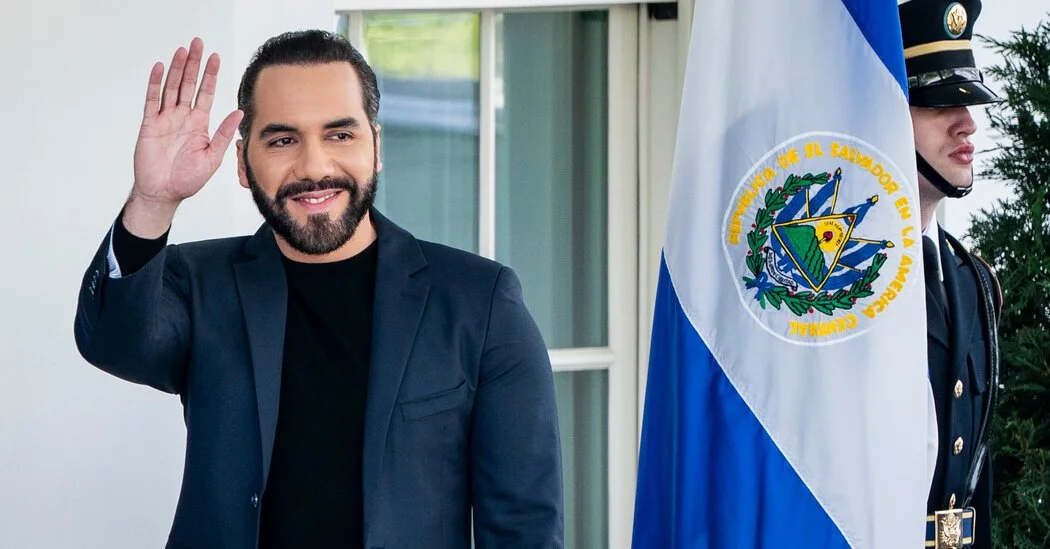
Nayib Bukele, President elect, El Salvador.
When evaluating different leaders from different countries, even when they are coming from the same right-wing ideological side, we have to keep in mind that they are not all the same. For example, Bukele and Milei, despite being categorised as two of the most radical presidents in Latin America, differ a lot in their approaches. Milei is rather liberal, while Bukele self-identifies as an authoritarian dictator. However, in both countries transparency is lacking and citizens are often excluded from the decision-making process.
It is also important to separate immediate financial reactions from possible future risks and long-term effects. While investors welcome right-wing politicians and act with caution when the left is on the rise, the overall effect on the economy can be not as good, due to a turn towards populist narratives and sometimes external uncontrollable factors.
The social side of the coin should not be forgotten as well. Sometimes a more stable economy on the outside with lower inflation and fiscal surpluses, doesn’t directly mean higher household wellbeing. Social spendings when cut drastically at once can account to a growth of expenses and consequently one in credits, while decreasing inflation actually increases real interests to be paid for those loans. Additionally, progressive governments are the ones that proactively promote equality between different social groups and equitable rights for minority groups.
References
Arias, E., & Burt, J.-M. (2023). The “new” extreme right in Latin America. LASA Forum,
54(4), 4–7. https://forum.lasaweb.org/files/vol54-issue4/dossier-1.pdf
AS/COA Online. (2026, April 15). IMF and World Bank’s April 2026 update: Latin America’s economic outlook. Americas Society/Council of the Americas.
https://www.as-coa.org/articles/imf-and-world-banks-april-2026-update-latin-americas-econo mic-outlook
BBC News. (2020, July 6). Change in Dominican Republic as opposition wins presidency.
https://www.bbc.com/news/world-latin-america-53268860
Blanco, S. (2026, June 23). Colombia joins the rise of the far right in Latin America. El País. https://english.elpais.com/international/2026-06-23/colombia-joins-the-rise-of-the-far-right-in-l atin-america.html
Blanco, S. (2026, June 24). Keiko Fujimori secures victory in Peru’s presidential election after taking an unassailable lead. El País.
https://english.elpais.com/international/2026-06-24/keiko-fujimori-secures-victory-in-perus-pr esidential-election-after-taking-an-unassailable-lead.html
Bocanegra, N., & Campos, R. (2026, June 16). Colombia presidential candidates have rival visions, but fiscal reality looms for both. Reuters.
https://www.reuters.com/world/americas/colombia-presidential-candidates-have-rival-visionsfiscal-reality-looms-both-2026-06-16/
Campos, R., & George, L. (2025, October 27). Argentine assets cheer Milei’s election victory with massive rally. Reuters.
https://www.reuters.com/world/americas/argentine-markets-expected-rally-after-mileis-electio n-victory-2025-10-27/
Cárdenas, M., & Sanz Posse, E. (2024). A new vintage of populism in Latin America? The perils of the new paradigm(CGD Working Paper 683). Center for Global Development.
https://www.cgdev.org/sites/default/files/new-vintage-populism-latin-america-perils-new-para digm.pdf
CNN. (2024, February 3). El Salvador’s Nayib Bukele expected to win reelection amid security crackdown. https://edition.cnn.com/2024/02/03/americas/el-salvador-nayib-bukele-election-preview-intl/in dex.html
Do Rosario, J., & George, L. (2023, November 20). Stocks, bonds rally over Argentina’s President-elect “chainsaw” change pledges. Reuters.
https://www.reuters.com/markets/mileis-argentina-win-expected-pressure-peso-buoy-bonds2023-11-20/
Fitch Ratings. (2025, March 5). IMF program eases El Salvador’s financing constraints.
https://www.fitchratings.com/research/sovereigns/imf-program-eases-el-salvadors-financingconstraints-05-03-2025
Fitch Ratings. (2026, June 2). Colombia’s high-stakes election runoff to shape economic policy.
https://www.fitchratings.com/research/sovereigns/colombias-high-stakes-election-runoff-to-s hape-economic-policy-02-06-2026
Funke, M., Schularick, M., & Trebesch, C. (2023). Populist leaders and the economy.
American Economic Review, 113(12), 3249–3288. https://doi.org/10.1257/aer.20202045
George, L., & Otaola, J. (2023, December 13). Argentina peso devalued over 50% as markets welcome Milei’s “tough pill”. Reuters.
https://www.reuters.com/markets/markets-greet-argentinas-tough-pill-fix-economy-with-cauti ous-optimism-2023-12-13/
Harrison, C. (2026, April 22). Approval tracker: Argentina’s President Javier Milei. AS/COA.
https://www.as-coa.org/articles/approval-tracker-argentinas-president-javier-milei
Investing.com. (2026, June 22). Colombia peso hits five-year high as stocks fall after vote. https://uk.investing.com/news/stock-market-news/colombia-peso-hits-fiveyear-high-as-stocks
-fall-after-vote-93CH-4739013
Jacobs, H. (2025, January 7). The philosopher king’s policies: Assessing the long-term impact of Mano Dura on El Salvador and the Americas. Chicago Journal of Foreign Policy. https://www.cjfp.org/the-philosopher-kings-policies-assessing-the-long-term-impact-of-manodura-on-el-salvador-and-the-americas-3/
Joint Research Centre. (2024). EDGAR 2024 greenhouse gas emissions [Data set].
European Commission. https://edgar.jrc.ec.europa.eu/dataset_ghg2024
Käufer, T. (2024, November 26). How realistic is El Salvador’s “economic miracle”?Deutsche Welle. https://www.dw.com/en/how-realistic-is-el-salvadors-economic-miracle/a-70889508
Loper, J. (2026, June 19). Colombia’s right-wing offensive and the politics of order. Jacobin. https://jacobin.com/2026/06/colombia-presidential-runoff-espriella-cepeda
Mayka, L., & Smith, A. E. (2021). Introduction: The grassroots right in Latin America: Patterns, causes, and consequences. Latin American Politics and Society, 63(3), 1–20. https://doi.org/10.1017/lap.2021.20
Meléndez-Sánchez, M., & Perelló, L. (2026, February 23). Costa Rica’s democracy faces a new test, but it will endure. Americas Quarterly.
https://www.americasquarterly.org/article/costa-ricas-democracy-faces-a-new-test-but-it-willendure/
Miller, L., & Campos, R. (2026, May 12). Argentina’s country risk falls steadily, fueling debate on return to capital markets. Reuters. https://www.reuters.com/world/americas/argentinas-country-risk-falls-steadily-fueling-debatereturn-capital-markets-2026-05-12/
Misculin, N. (2025, May 5). In Milei’s Argentina “economic miracle,” not everyone’s a winner. Reuters. https://www.reuters.com/world/americas/mileis-argentina-economic-miracle-not-everyones-w inner-2025-05-05/
Muzio, E. (2026, June 23). Families in Argentina borrowing to buy food as Javier Milei’s economy falters. Argentina Reports.
https://argentinareports.com/families-in-argentina-borrowing-to-buy-food-as-javier-mileis-eco nomy-falters/4268/
OECD. (2025). OECD economic surveys: Argentina 2025. OECD Publishing. https://doi.org/10.1787/27dd6e27-en
Otaola, J. (2024, February 23). Argentina markets double down on Milei as investors “start to believe”. Reuters. https://www.reuters.com/world/americas/argentina-markets-double-down-milei-investors-star t-believe-2024-02-23/
Rocha, J. C., & Kaysel Velasco e Cruz, A. (2026). The limits of the right-wing nation: A comparative analysis of far-right discourse in Bolivia and Brazil (2016–2023). Brazilian Political Science Review, 20(1), Article e0003. https://doi.org/10.1590/1981-3821202600010003
Romero, F., & Jones, M. (2021, December 20). Chilean stocks, peso tumble after Boric elected president. Reuters. https://www.reuters.com/markets/currencies/chiles-peso-mining-stocks-tumble-after-leftist-bo ric-wins-election-2021-12-20/
Rovira Kaltwasser, C. (2023). The far-right in Latin America: Definitions and explanations.
Friedrich-Ebert-Stiftung. https://collections.fes.de/publikationen/ident/fes/20950
Strohecker, K. (2021, November 22). Chile peso, stocks jump as hard-right candidate Kast tops first election round. Reuters.
https://www.reuters.com/markets/us/chile-peso-jumps-hard-right-candidate-kast-tops-first-ele ction-round-2021-11-22/
The Editorial Board. (2026, March 14). Security, inflation and disillusionment—How the right conquered Latin America. Tomorrow’s Affairs.
https://tomorrowsaffairs.com/security-inflation-and-disillusionment-how-the-right-conquered-l atin-america
Vargas Llosa, A. (2026, May 25). Why is the Milei economy struggling? Inflation, debt dynamics, and incomplete liberalization. Independent Institute. https://www.independent.org/article/2026/05/25/milei-economy-struggling/
Vizion API. (2025, October 28). Argentina’s economic transformation under Javier Milei:
From crisis to opportunity. https://www.vizionapi.com/blog/argentinas-economic-transformation-under-javier-milei-fromcrisis-to-opportunity
World Bank. (n.d.). Poverty and Inequality Platform. Retrieved June 28, 2026, from https://pip.worldbank.org/