Succession.
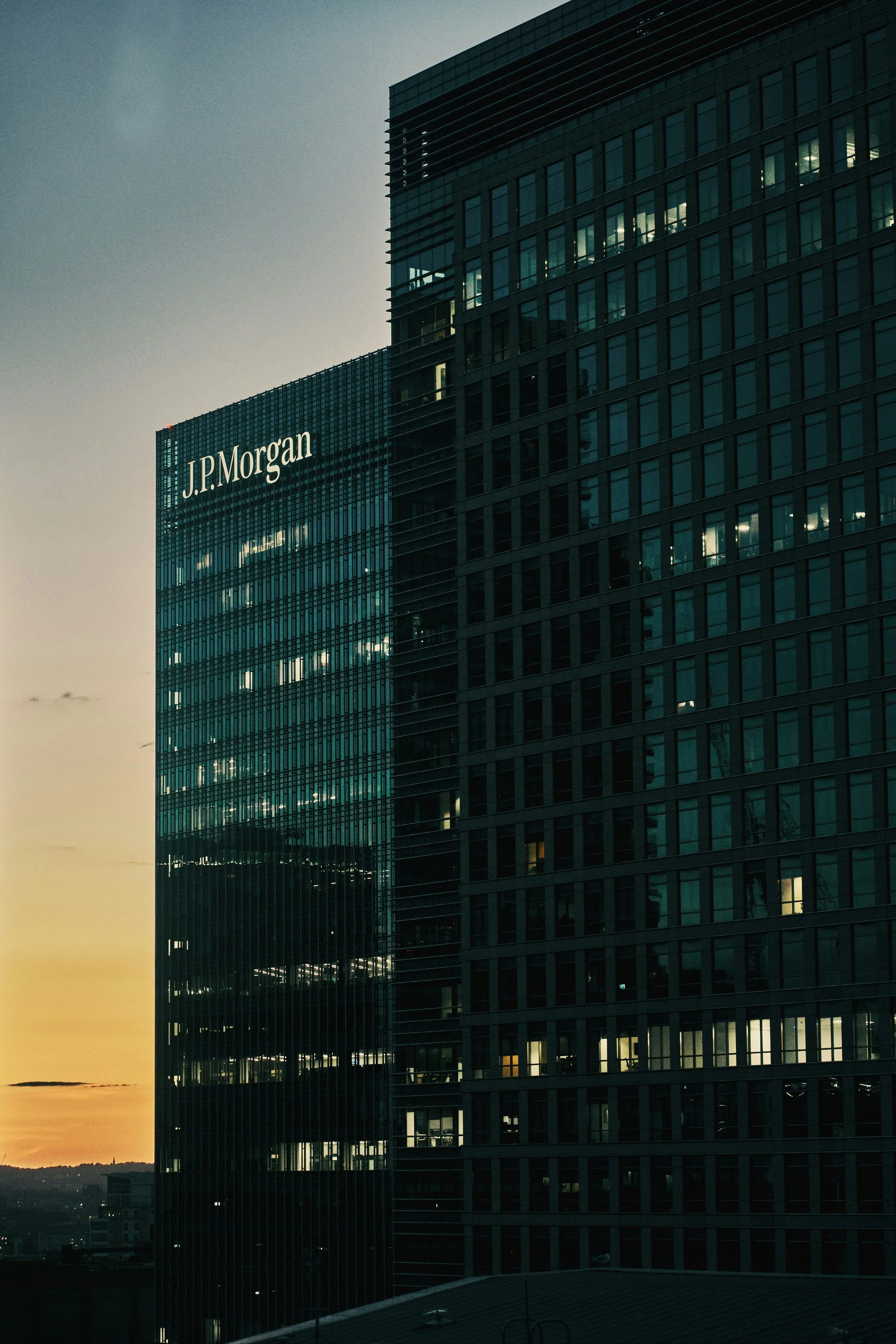
JP Morgan HQ, 270 Park Avenue in Midtown Manhattan, New York City.
In the acclaimed HBO series “Succession”, the Mogul Logan Roy, now old, struggles to find a successor worthy of his empire, and the failure to do so is the catalyst for the crisis that will define the entirety of the show up until the last frame.
Although heavily inspired by the Murdock family, the series shines light on how dangerous and disruptive not having a clear and agreed upon plan can be for a large company, and Jamie Dimon knows this very well.
Jamie Dimon rose to power in an unconventional way. He chose to accept tasks with higher responsibility in smaller firms rather than climb the classic corporate ladder. In particular, he became famous with his family friend and mentor Sandy Weill in his years as president and COO of Travelers Group, which through a series of mergers and acquisitions became what today is known as Citigroup, a Behemoth of global finance.
During an executive retreat in November 1998, Dimon was asked to resign by Weill. The reasons are far from certain, but a defining factor has been the friction with his mentor, as he was assigned to train the latter’s niece. However he refused to be promoted as he adhered to strict values of meritocracy.
This was everything but the beginning of Jamie Dimon’s raise to the top of world finance, as he joined Bank One as CEO, a struggling bank on the brink of failure, he invested $60 million of his own money to signify full commitment, and in a short amount of time the bank pivoted around and attracted the attention of another legend in the financial world.
J.P. Morgan had been a powerhouse for almost a century, and its founder, John Pierpont Morgan,who influenced the USA’s financial policies at the beginning of the 20th century. However, the bank at the time lost its dominance, and that’s why they saw in Jamie Dimon the perfect successor to their retiring CEO.
In 2004 J.P. Morgan Chase acquired Bank One with the specific condition of Dimon becoming COO first and CEO later; since then he has led the company to expansion, his strategy allowing him to grow more and more becoming the go-to man even for the government, the latter seeking his help and support in times of crisis such as in 2008 and during covid.
The positioning of the company has since been dubbed “The fortress balance sheet” and it is what allowed him to retain assets even in the most dire times, the strategy is funded on one key principle: "Leverage kills you. Aggressive accounting can kill you." (cit.).
The base is simple: margins and liquidity way bigger than the limits, priority to clients and solvency even at the cost of high short term gains: when everyone was loading up on subprime mortgages CDOs he bided his time and was criticized for his overly conservative style. Yet, a few years later he was the only one standing, the fortress had weathered the storm and was now ready to bail out the others, namely Bear Stearns, and to reclaim the primacy in the world of banking.
Given the importance of Jamie Dimon, it comes to no surprise that now that he is in his seventies, the talks for succession are not just a question of speculation, but a matter of importance. Not just the company, but the entire world, stocks fluctuations capable of disrupting entire markets depend on it.
Probably partially because of this the announcement came significantly before the CEO will step down, to ease tensions and get people used to the idea, a move we have seen from another legend of the financial World: Warren Buffet.
However what happened is not a declaration of a winner, but rather the announcement of the beginning of a race for the throne of J.P. Morgan, and the two candidates now acting as Co-presidents are two heavy hitters within the firm.
Doug Petno is the symbol of unwavering loyalty and institutional commitment: he has been with the firm since 1989, a 33 - year veteran of the firm, serving as Co-CEO of the Commercial & Investment Bank (CIB), jointly responsible for Global Banking, Markets, Payments, and Securities Services.
He is to be credited for the increasing success of the Commercial Banking branch of the company, incarnating the values of loyalty, precision and safety showcased in the fortress balance sheet, his ultimate ascendency to CEO would signify a continuation of the line of big margins and biding its time.
Troy Rohrbaugh started on the Philadelphia Stock Exchange, and made his way managing businesses in New York, London, and Tokyo. Later, he joined as Managing Director and Global Head of Foreign Exchange Derivatives for J.P. Morgan, moving then to Head of Global Markets in 2019 and then as Co-Head of Markets & Securities Services as of 2023.
His contributions include the success of online trading, he symbolises progress and evolution.
This is not the first time Jamie Dimon elevates 2 executives to the role of co presidents, however all previous main candidates for the top job have stepped down, for this reason this recent appointments are not to be considered as the announcement of a new era, but rather a trial to see how they perform and to allow markets to get used to new faces to avoid excessive fluctuations.
Another important fact to point out is that, albeit the face and brain of the machine, Jamie Dimon unilaterally determine his successor, as this role is responsibility to the Board, which did not rule on the matter just yet, and their decision will be known eventually, as of today, these two names are officially the front runners.
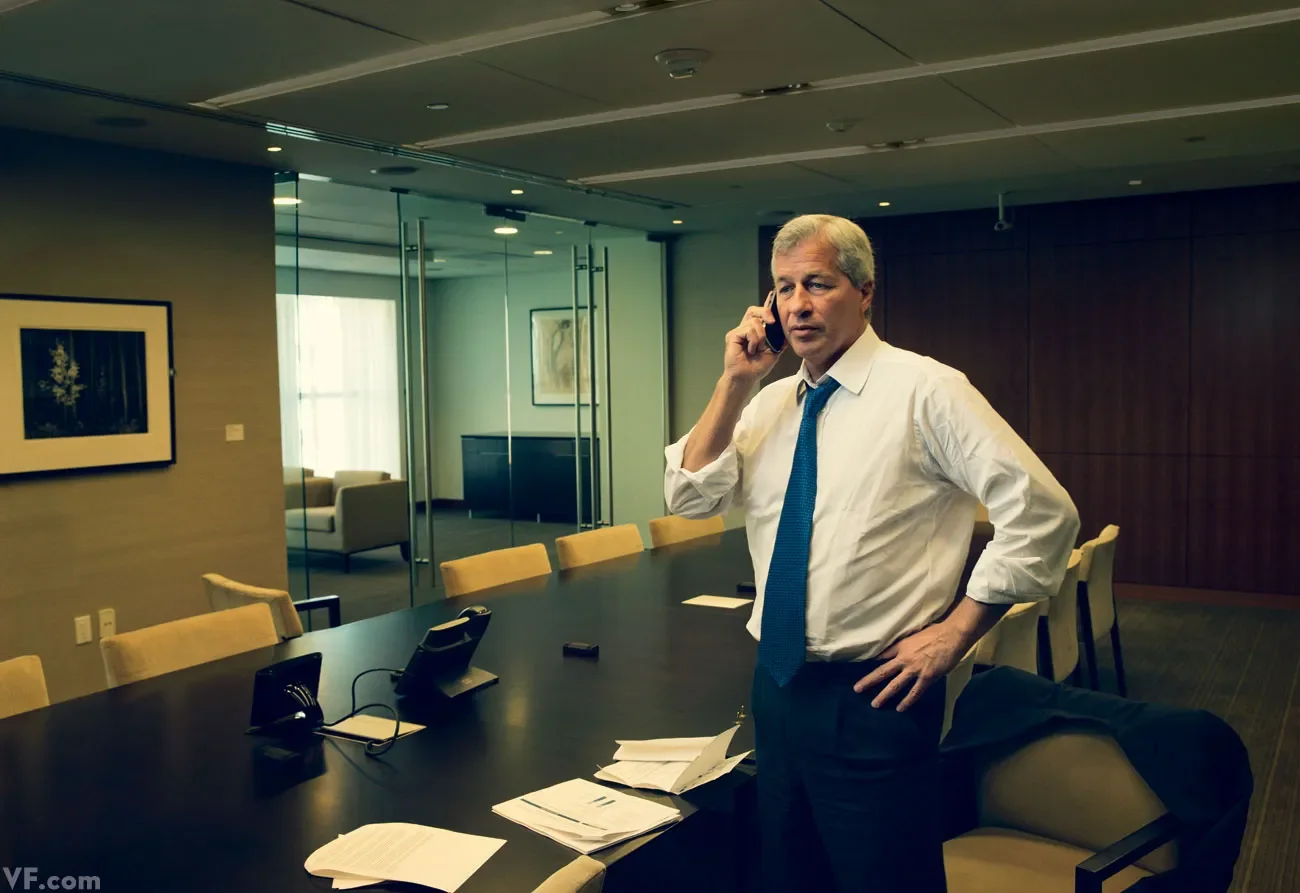
James Dimon, JPMorgan Chief Executive Officer.